Classic Bigné Choux Pastry
Pasta choux per bignè
A service-ready choux pastry with a dry panade, controlled egg addition and a two-stage bake for hollow, crisp shells.
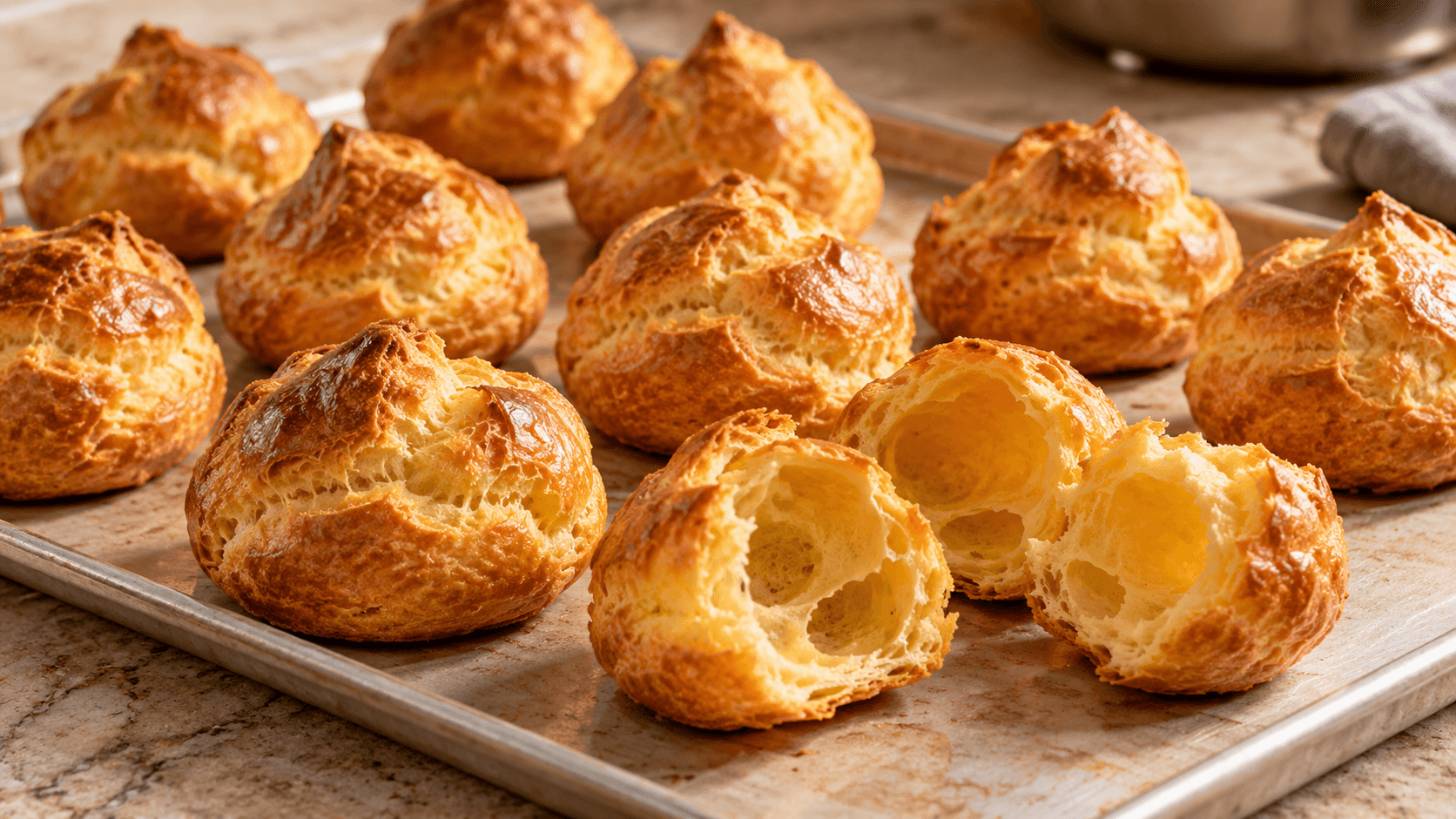
A service-ready choux pastry with a dry panade, controlled egg addition and a two-stage bake for hollow, crisp shells.
Approximately 45-50 medium bignè, piped at 3-3.5 cm
Ingredients
Choux paste
- Water250 g
- Unsalted butter, 82% fat if available125 g
- Fine salt4 g
- Caster sugar, optional for savoury use; helps colour in sweet bignè5 g
- Plain flour or medium-strength 00 flour, approximately 10.5-12% protein150 g
- Whole egg, beaten; add only as much as the panade needs240 g to 270 g
Method
Bring the water, butter, salt and sugar to a full boil, making sure the butter is completely melted before the liquid boils hard.
Remove from the heat, add all the flour at once and stir firmly until no dry flour remains. Return to medium heat and cook for 2-3 minutes, stirring continuously, until the panade pulls cleanly from the pan and a thin film forms on the base.
Transfer to a mixer fitted with the paddle. Mix on low for 2-3 minutes to release steam and cool the panade to about 50-55°C before adding egg.
Add the beaten egg gradually, fully incorporating each addition. Stop when the paste is smooth and glossy, holds its shape when piped and falls from a spatula in a slow V. Do not force in the full egg quantity if the correct texture is reached earlier.
Pipe 3-3.5 cm mounds through a 10-12 mm plain nozzle onto a perforated silicone mat or lined tray. Smooth any peaks with a damp fingertip.
Bake in a fully preheated static oven at 200°C for 18-20 minutes without opening the door. Reduce to 165-170°C and bake for a further 12-15 minutes, until deeply golden and firm.
Pierce each shell discreetly at the base or side to release steam. Switch the oven off, leave the door slightly ajar and dry the shells for 8-10 minutes.
Cool completely before filling. Use the same day for maximum crispness, or freeze the unfilled baked shells for up to 1 month. Refresh from frozen at 160°C for 5-8 minutes and cool before filling.
Chef’s notes
- The final egg quantity is always decided by texture because flour absorption, egg size and room conditions vary.
- Cooling the panade to about 50-55°C before the egg goes in reduces the risk of partially setting the egg.
- A crisp shell depends on enough colour and final drying, not only on the initial rise.
Allergens and diet
Gluten. Eggs. Milk.
Last refined · September 2026