02Culinary Philosophy
Technique
Understand why before deciding how. Technique gives you freedom, not limits.
This chapter is a working reference from the kitchen: principles, practical habits and small details that make cooking more controlled, repeatable and enjoyable.
At a glance
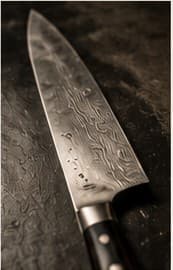
Knife
A sharp knife, stable board and controlled grip are faster and safer than forcing a blunt blade.
Heat
Browning needs heat and a dry surface. Tender cooking often needs gentler control.
Season
Taste in stages. Salt builds flavour, acid sharpens it, fat carries it and bitterness needs balance.
01
Knife skills that matter
Speed comes after control. The goal is clean, repeatable cutting with the least wasted movement.
- Stabilise the board with a damp cloth or non-slip mat underneath it.
- Use a comfortable pinch grip near the heel of a chef's knife and keep the guiding hand in a claw shape.
- Let the knife do the work. Slice through food instead of crushing it with downward force.
- Learn a few cuts properly: slice, dice, julienne, chiffonade and a controlled rocking chop.
- Uniform pieces cook at a similar rate. Precision is not decoration, it affects texture and doneness.
03
Control heat before the food controls you
Most cooking problems are heat problems disguised as recipe problems.
- Preheat pans when browning. A cold pan encourages sticking and moisture loss before colour develops.
- Dry the surface of meat, fish and vegetables when you want strong browning.
- Do not crowd a pan. Too much cold food drops the temperature and traps steam.
- Use residual heat. Food continues to cook after leaving the pan, oven or grill.
- Lower heat when butter solids, garlic, spices or delicate sauces begin to darken faster than intended.
04
Season in layers
Seasoning is not a final sprinkle. It is part of the cooking process.
- Taste before adding more salt. Reduction concentrates seasoning.
- Use acidity to brighten rich food, but add it with purpose and taste again.
- Salt can draw moisture from vegetables and proteins, so timing matters depending on the result you want.
- Finish with fresh herbs, citrus zest, good oil or a final grind of spice when those aromas should remain vivid.
05
Shortcuts worth taking
The best shortcut removes repetition, not quality.
- Make useful foundations in batches: stocks, sauces, flavoured oils, pickles, crumbs and purées that appear across several dishes.
- Use a scale for repeatability. It is faster than correcting an inconsistent recipe later.
- Label and date mise en place so tomorrow's service starts with information instead of guesswork.
- Use machines where they improve consistency: blender, stick blender, food processor, mandoline or vacuum sealer. Use guards and safe technique.
- Do not shortcut resting, fermentation, reduction or chilling when those stages are what create the final texture or flavour.
06
Mise en place is a technique
Organisation is one of the strongest forms of speed.
- Read the whole method before starting.
- Group ingredients by the stage in which they are used.
- Prepare the slowest or most temperature sensitive elements first.
- Clean as you work. A clear board and clear mind reduce mistakes.
- Before service, ask what can fail first and have the answer ready.
The other pillars
01
Ingredient
Respect what comes through the kitchen door. Great food starts with great ingredients, handled with care.
03
Culture
Learn from tradition without becoming trapped by it. Different cuisines, people and places widen the table.
04
Curiosity
Test. Fail. Observe. Learn. Try again. Curiosity keeps the kitchen alive.
05
People
A kitchen is only as good as the people inside it. Respect, kindness and teamwork make everything taste better.