Basil
Ocimum basilicum
The summer herb of the Italian kitchen: soft, aromatic leaves that belong with tomato, olive oil and bread, and lose their scent the moment they are cooked too long.
- Also
- Sweet basil, Basilico
- Family
- Lamiaceae (mint family)
How to recognise it
In the garden and in the hand.
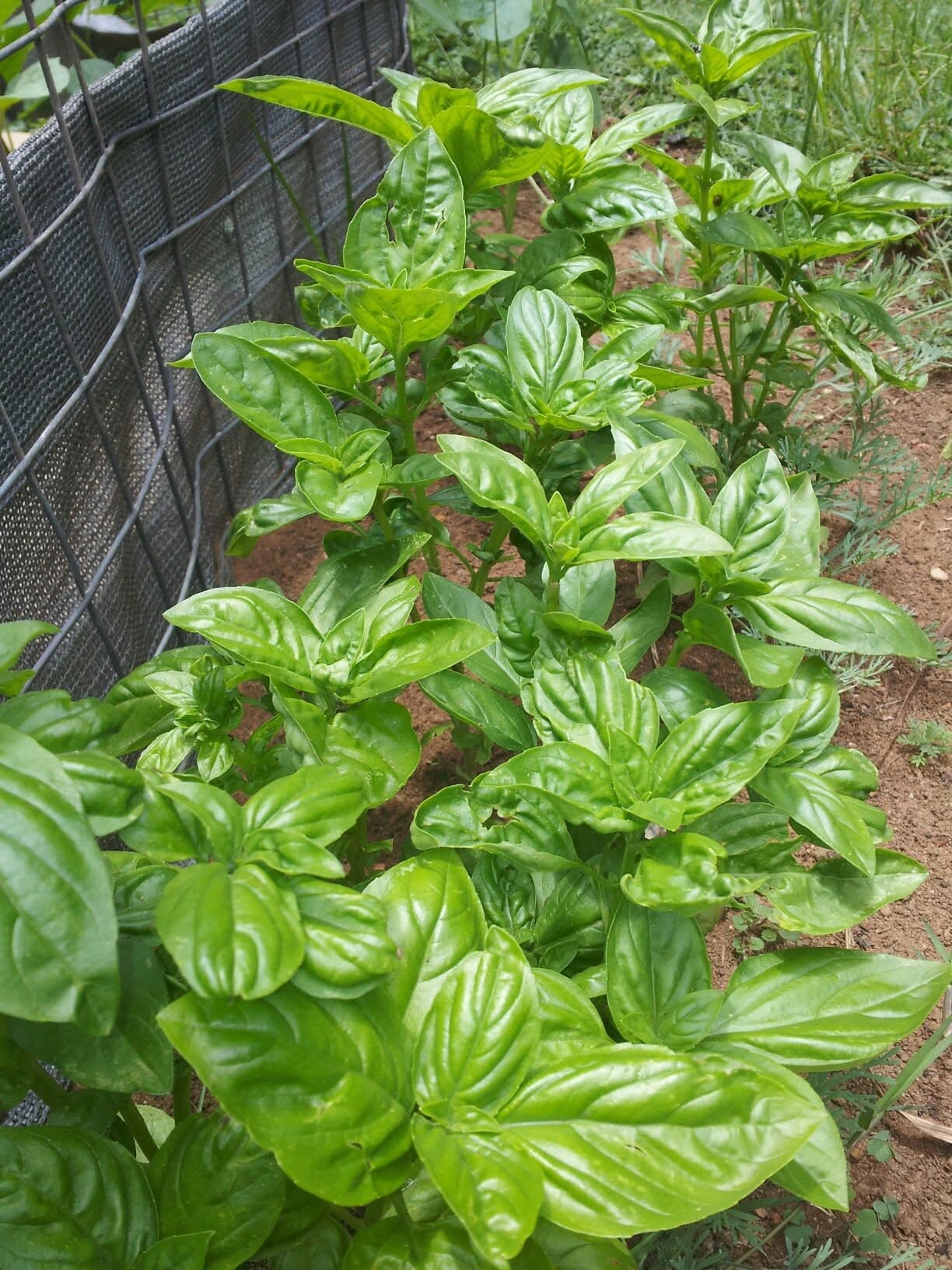
growingThe plant in the garden: glossy oval leaves in opposite pairs on square stems.
- Growth habit
- A bushy annual, thirty to sixty centimetres tall, with square stems and leaves in opposite pairs.
- Leaves
- Oval, glossy, slightly cupped leaves with a smooth or lightly toothed edge, bright to deep green, two to eight centimetres long.
- Stem
- Square in cross-section, green and tender when young, woody at the base as the plant ages.
- Flower
- Spikes of small white or pale purple flowers at the tips; the plant turns bitter once it flowers, so tips are usually pinched out.
- Colour
- Bright green (purple in some varieties).
- Aroma
- Sweet, clove-like and peppery when a leaf is rubbed.
- Texture
- Soft, tender, easily bruised.
- Distinguishing features
- The square stem, opposite glossy leaves and the sweet clove scent together identify it.
- Common lookalikes
- Young mint and lemon balm share the square stem and paired leaves; their smell is quite different (mint, lemon) and their leaves are rougher.
CautionIdentify by scent and stem together, never by leaf shape alone.
In the garden
Growing and harvest.
- Conditions
- Warmth, sun, rich soil and steady water; it collapses in cold and frost.
- Season
- A warm-season annual: planted after frost, at its best through summer. Seasons vary by region and climate.
- Harvested part
- The leaves and tender tips.
- Ready when
- Pick once the plant has several pairs of leaves; keep pinching the tips before flowering to keep the leaves sweet.
In the kitchen
Flavour and use.
- Flavour
- Sweet, peppery, faintly of clove and anise.
- Aroma
- Its whole point: intense when fresh, fleeting with heat.
- Texture
- Tender leaves that bruise and blacken when cut with a blunt knife.
- Edible parts
- Leaves and soft tips; flowers are edible but bitter.
- Preparations
- Torn over a dish at the end, Pounded into pesto, Infused into oil, Layered with tomato and mozzarella
- Techniques
- Tearing by hand, Pounding in a mortar, Cold infusion, Adding off the heat
- Pairs with
- Tomato, Olive oil, Garlic, Pine nuts, Mozzarella, Lemon
Selection and storage
Choosing, keeping, preserving.
- Choosing
- Bright, unblemished leaves with a strong scent; avoid blackened or wilted bunches.
- Storage
- Stand the stems in a glass of water at room temperature, loosely covered; the fridge blackens the leaves within a day.
- Preserving
- Pounded into pesto and frozen, or blended with oil and frozen in portions. Drying loses most of the aroma.
Traditional uses, nutrition and current evidence
What is known, and how well.
Each statement carries its evidence level in words and a numbered source. Nothing here recommends an ingredient as a treatment.
Nutrition
Traditional use
Traditional use, not clinically established
Long used in Mediterranean and South Asian cooking, and in traditional practice as a digestive and calming herb; these uses are not clinically established. [1]
Current evidence
Early or limited evidence
Laboratory studies describe antioxidant and antimicrobial activity in basil extracts. This has not been shown to translate into health effects from eating the herb. [3]
Safety and cautions
Before you cook with it.
- Culinary quantities of fresh basil are safe for most people.
- Basil essential oil and concentrated extracts contain estragole and methyleugenol, compounds that regulators advise limiting; concentrated preparations are not the same as the fresh herb and are not recommended in pregnancy or for young children.
- Anyone taking anticoagulant medication who eats large amounts of vitamin K-rich greens should keep intake consistent and follow their clinician's advice.
This ingredient profile is provided for culinary and general educational purposes. It is not medical advice and does not recommend an ingredient as a treatment. Anyone who is pregnant, managing a medical condition, allergic, or taking medication should consult an appropriate healthcare professional before using concentrated herbal preparations or supplements.
Elsewhere on DUKAI
Also in the library
Sources and review
- 1USDA FoodData Central, Basil, freshNational food-composition database
- 2National Institutes of Health, Office of Dietary Supplements, Vitamin K fact sheetGovernment health agency
- 3European Medicines Agency, Committee on Herbal Medicinal Products. Public statement on the use of herbal medicinal products containing estragole (EMA/HMPC/137212/2005 Rev 1), 2021.Medicines regulator
Sources reviewed 9 September 2026. Culinary and general educational information.
Photographs are from Paul Dukai's own archive.