Patty pan squash
Cucurbita pepo
A small, scalloped summer squash, picked young and tender, with the mild sweetness of a courgette and a prettier shape.
- Also
- Pattypan, Scallop squash, Scallopini
- Family
- Cucurbitaceae (gourd family)
How to recognise it
In the garden and in the hand.
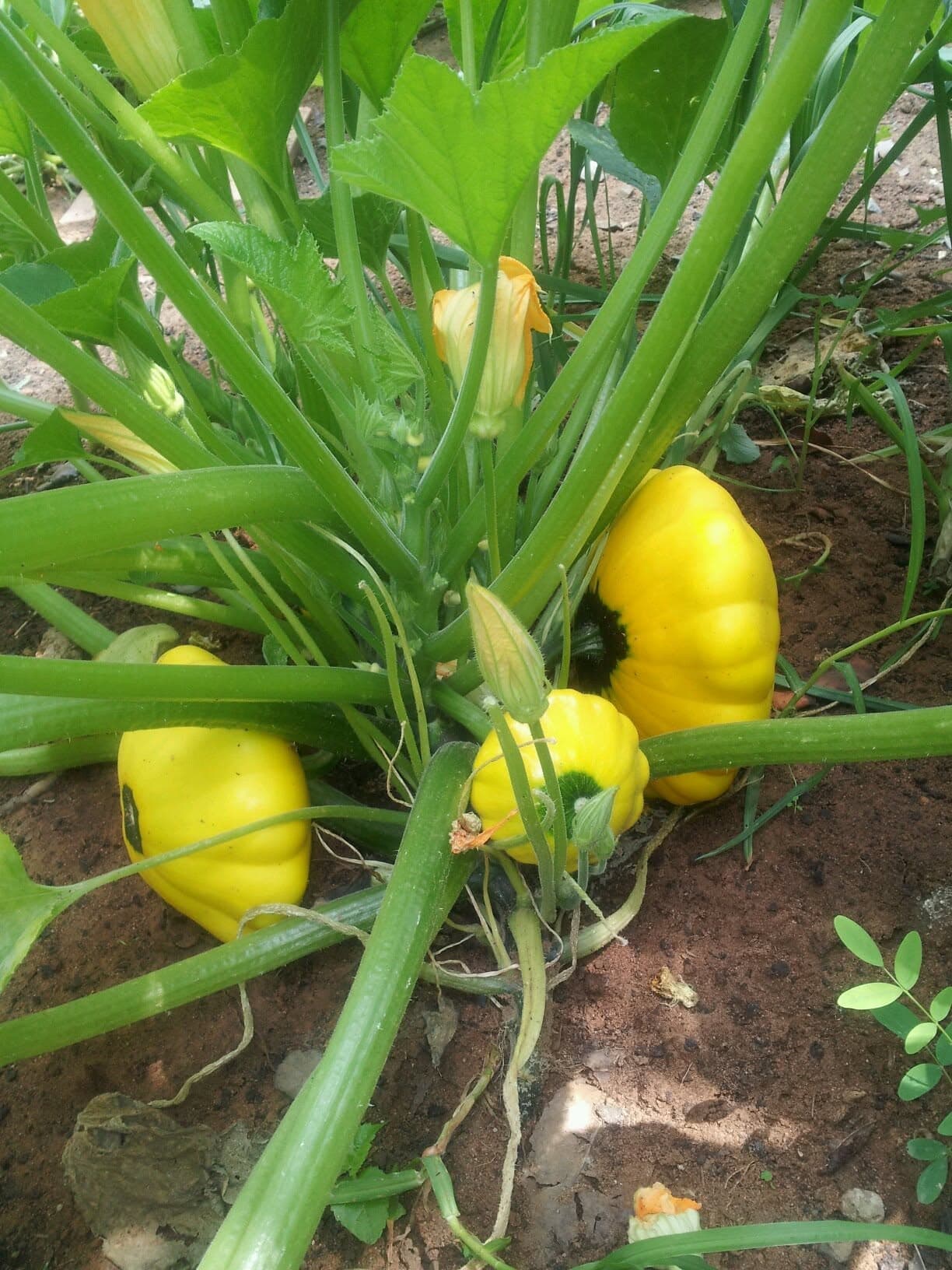
growingOn the plant: scalloped yellow fruit at the crown, under large rough leaves. 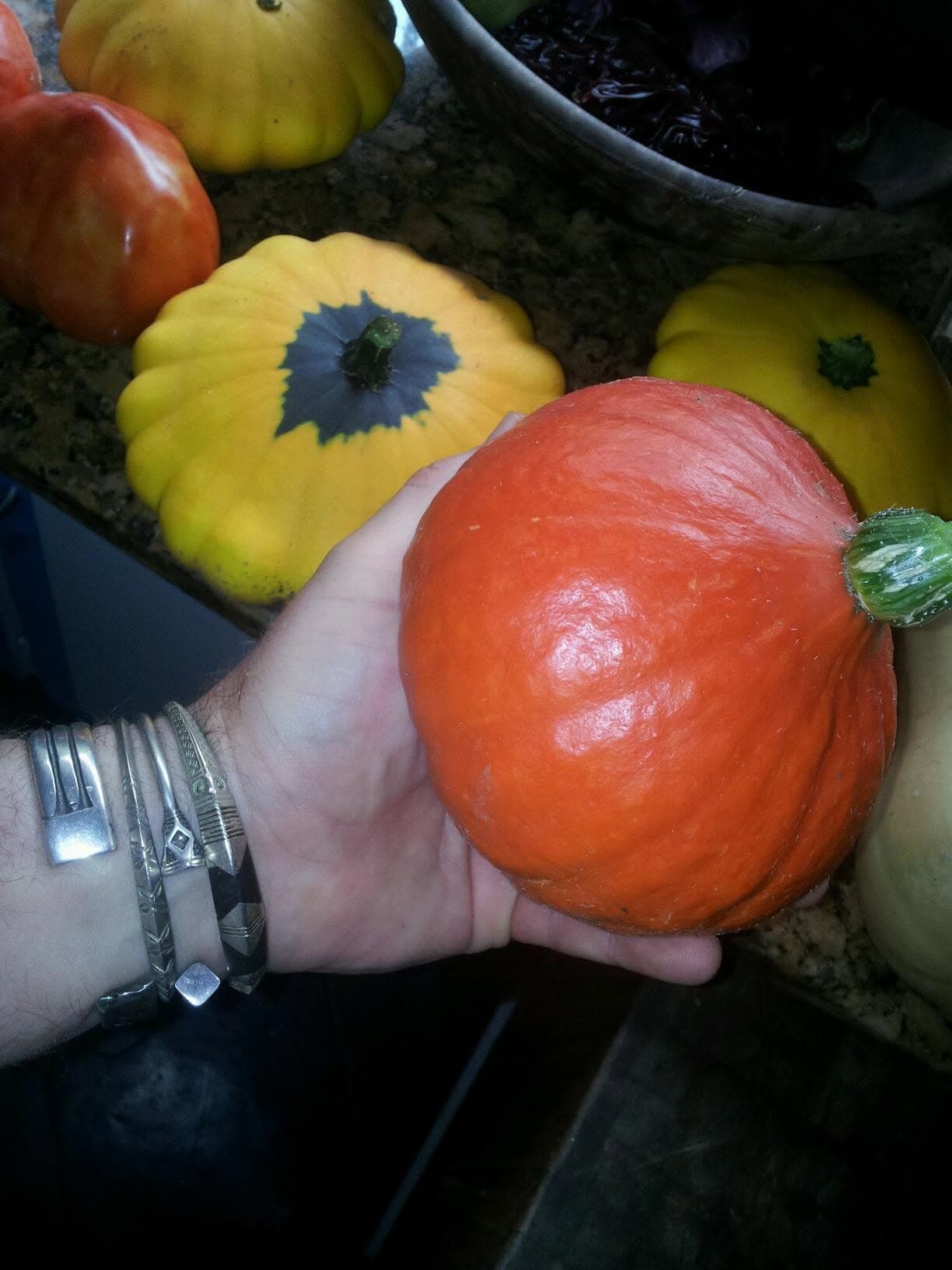
harvestedHarvested young, with the day's pumpkin: glossy skin, saucer shape.
- Growth habit
- A bushy, non-trailing plant with large leaves on long hollow stalks, fruit forming at the base.
- Leaves
- Large, deeply lobed, rough leaves, often silver-marked along the veins.
- Stem
- Thick, hollow, prickly leaf stalks from a central crown.
- Flower
- Large yellow-orange trumpet flowers; the fruit swells behind the female flower.
- Colour
- Yellow, pale green or white depending on the variety.
- Aroma
- Faint and fresh when cut.
- Texture
- Thin edible skin, tender pale flesh, tiny soft seeds when young.
- Distinguishing features
- The flat, saucer shape with scalloped edges is unmistakable.
- Common lookalikes
- None of note once the scalloped shape has formed; very young fruit can resemble a courgette bud.
In the garden
Growing and harvest.
- Conditions
- Full sun, rich soil, regular water; a prolific summer cropper.
- Season
- A warm-season crop, picked through summer while small. Seasons vary by region and climate.
- Harvested part
- The young fruit, and the flowers.
- Ready when
- Best at five to eight centimetres across, while the skin is glossy and a fingernail marks it easily; larger fruit turn hard-skinned and seedy.
In the kitchen
Flavour and use.
- Flavour
- Mild, sweet, faintly nutty.
- Texture
- Tender and juicy when young.
- Edible parts
- The whole young fruit, skin and all; the flowers.
- Preparations
- Halved and grilled, Sliced and pan-fried in olive oil, Roasted whole when small, Shaved raw into salads
- Techniques
- Grilling, Sautéing, Roasting, Steaming
- Pairs with
- Olive oil, Garlic, Lemon, Thyme, Parmesan, Mint
Selection and storage
Choosing, keeping, preserving.
- Choosing
- Small, glossy, firm and heavy for their size, with no soft or dull patches.
- Storage
- Refrigerate unwashed in a paper bag and use within a week; they lose sweetness quickly.
- Preserving
- Best fresh; slices can be grilled and kept under oil for a few days, or pickled.
Traditional uses, nutrition and current evidence
What is known, and how well.
Each statement carries its evidence level in words and a numbered source. Nothing here recommends an ingredient as a treatment.
Nutrition
Traditional use
Traditional use, not clinically established
One of the oldest cultivated squashes of the Americas, grown for its young fruit; no remedial use is claimed. [1]
Current evidence
No health-related research claim is made for this ingredient.
Safety and cautions
Before you cook with it.
- Eaten as food it is safe for most people.
- Very rarely a squash tastes strongly bitter; that bitterness comes from cucurbitacins and such fruit should not be eaten.
This ingredient profile is provided for culinary and general educational purposes. It is not medical advice and does not recommend an ingredient as a treatment. Anyone who is pregnant, managing a medical condition, allergic, or taking medication should consult an appropriate healthcare professional before using concentrated herbal preparations or supplements.
Sources and review
- 1USDA FoodData Central, Squash, summer, scallop, rawNational food-composition database
- 2National Institutes of Health, Office of Dietary Supplements, Vitamin C fact sheetGovernment health agency
Sources reviewed 9 September 2026. Culinary and general educational information.
Photographs are from Paul Dukai's own archive.