Sage
Salvia officinalis
Grey-green, velvety leaves with a warm, resinous flavour that belongs with butter, pumpkin, pork and veal.
- Also
- Common sage, Garden sage, Salvia
- Family
- Lamiaceae (mint family)
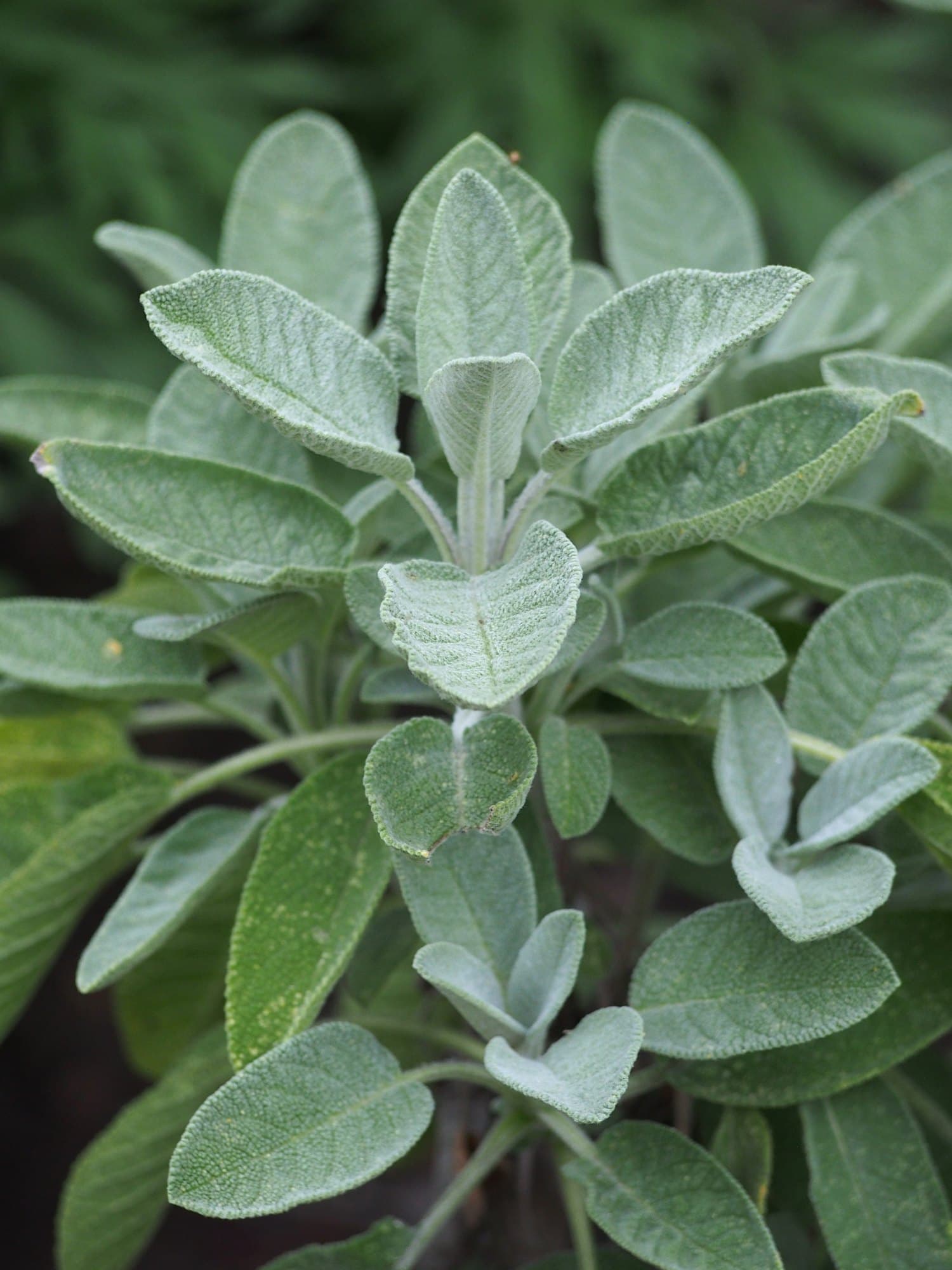
How to recognise it
In the garden and in the hand.
growingThe plant: grey-green velvety leaves in opposite pairs on square stems. Wrocław University Botanical Garden. 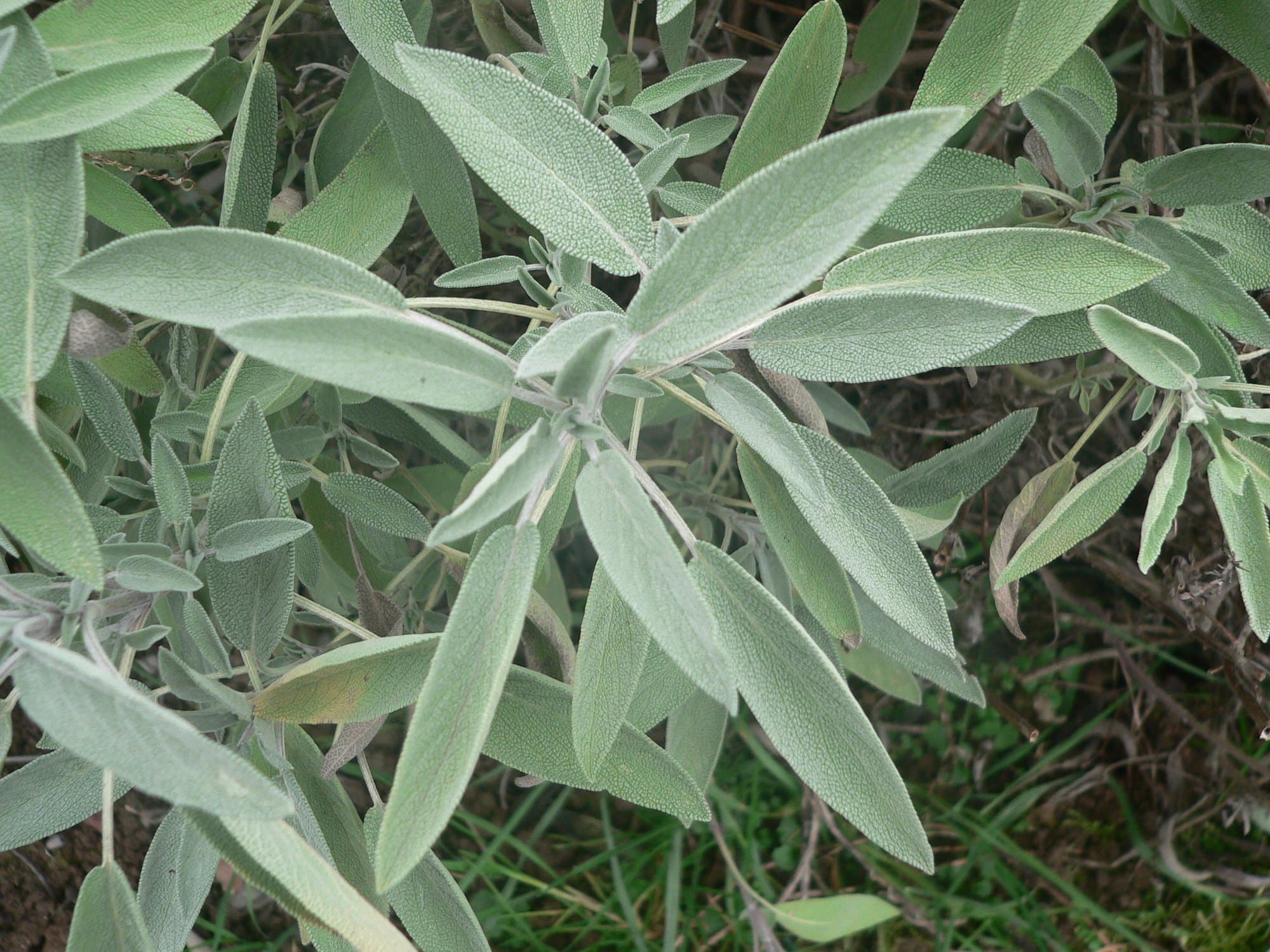
identifying featuresLeaves: finely wrinkled, downy, paler beneath. 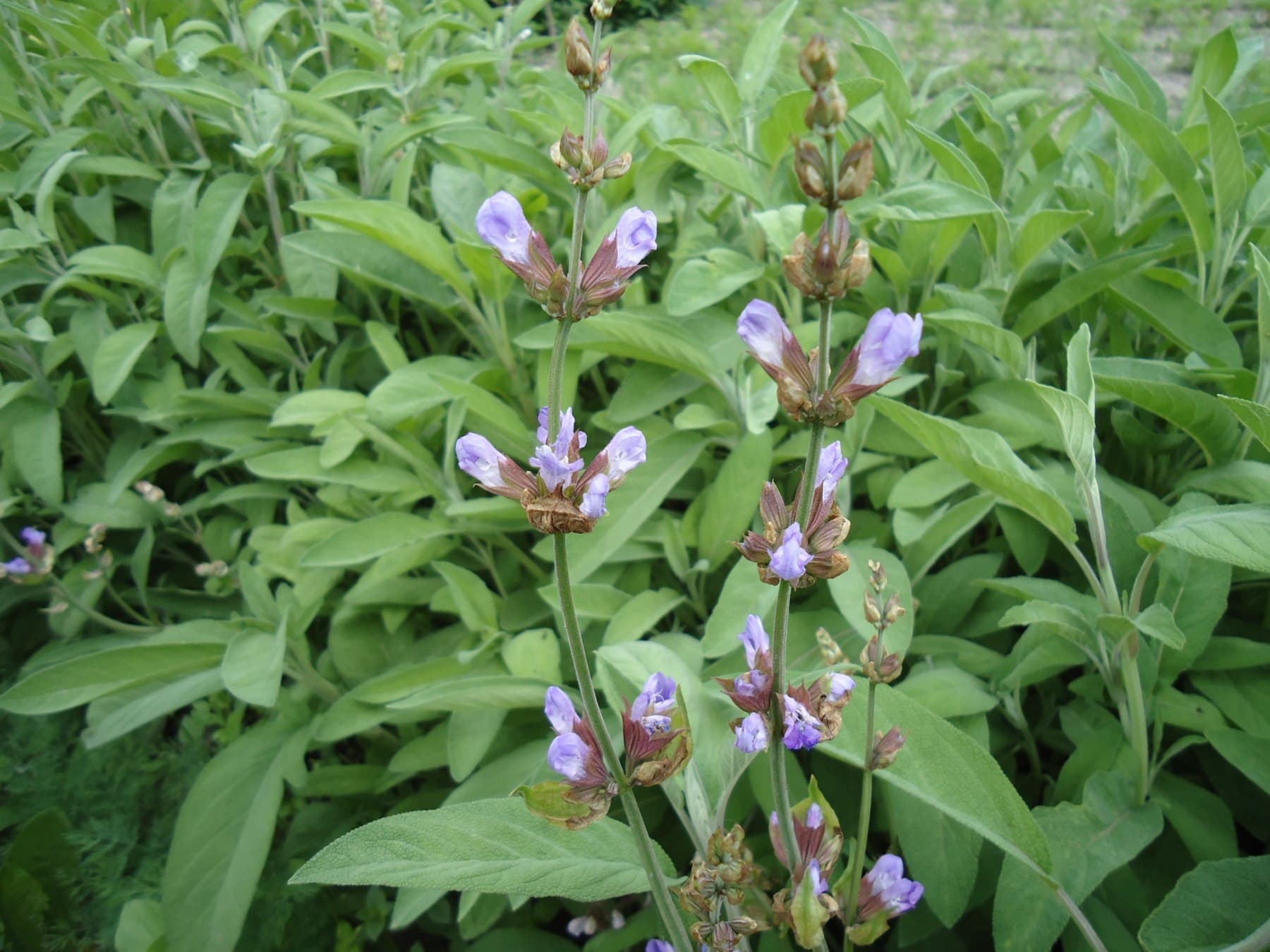
identifying featuresIn flower: violet-blue two-lipped flowers in whorls up the spike. 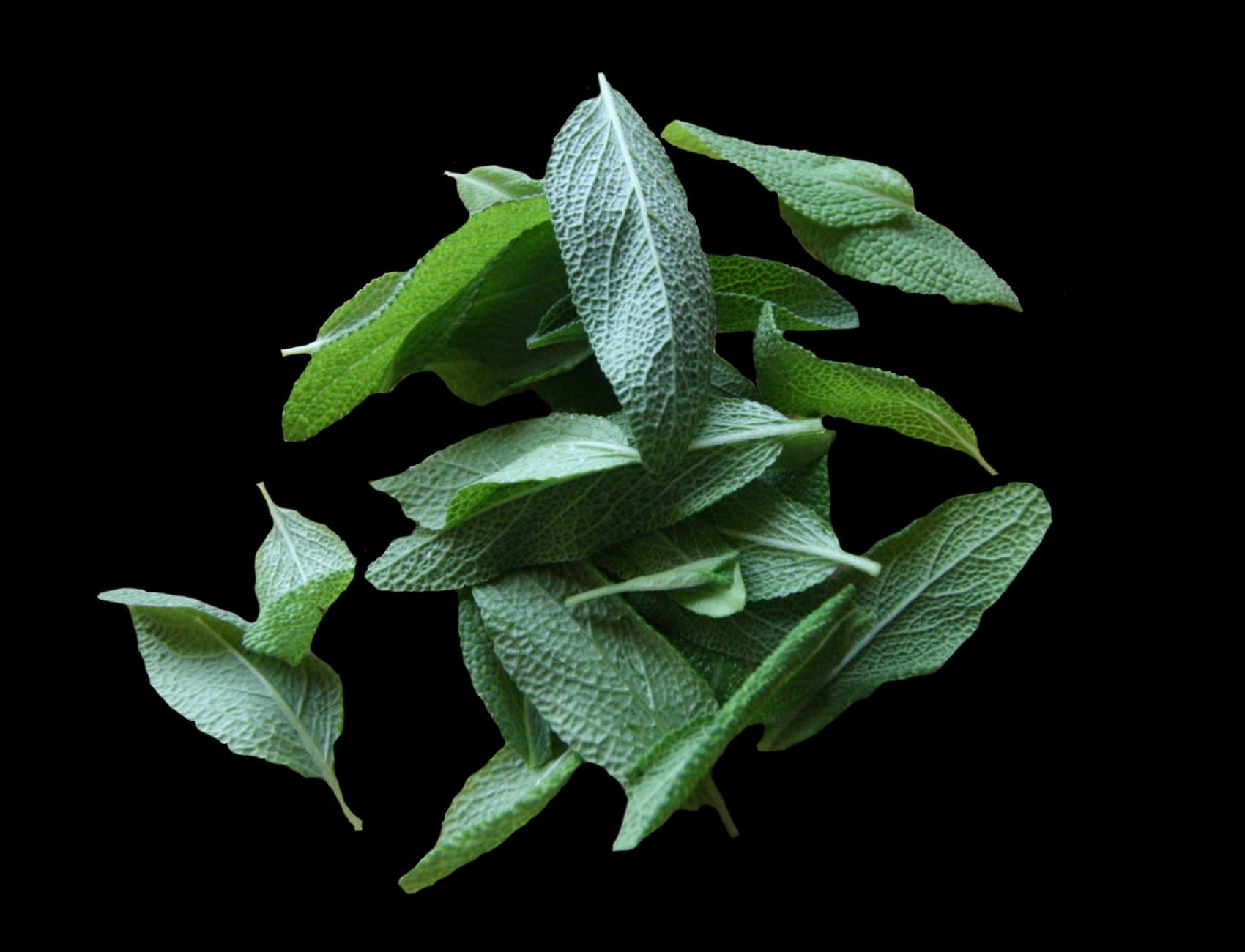
harvestedHarvested: the leaves as they reach the kitchen.
- Growth habit
- A low, woody evergreen shrub, forty to seventy centimetres high, spreading wider than it is tall; old stems become gnarled and bare at the base.
- Leaves
- Oblong to lance-shaped, three to eight centimetres long, grey-green above and paler beneath, finely wrinkled like fine leather and covered in soft down; in opposite pairs on square stems.
- Stem
- Square in cross-section, downy and green when young, woody and brown with age.
- Flower
- Spikes of two-lipped violet-blue flowers in early summer, in whorls up the stem; bees work them constantly.
- Colour
- Silvery grey-green; purple-leaved and variegated forms exist.
- Aroma
- Warm, camphorous and slightly bitter when a leaf is rubbed; unmistakable once known.
- Texture
- Soft, velvety, thick; tougher than most herbs.
- Distinguishing features
- The pebbled, velvety grey leaves in opposite pairs on a square stem, the woody base and the camphor scent together identify common sage.
- Common lookalikes
- Other Salvia species (clary sage, pineapple sage, ornamental salvias) share the flowers but have greener, thinner leaves and different scents. Lamb's ear (Stachys byzantina) has woollier, scentless leaves.
CautionIdentify by scent and leaf texture together. Ornamental salvias are not kitchen sage.
In the garden
Growing and harvest.
- Conditions
- Full sun, poor to moderate well-drained soil, little water once established; it dislikes wet feet and heavy shade.
- Season
- Evergreen and pickable year round in mild climates; at its best before flowering in late spring and early summer. Seasons vary by region and climate.
- Harvested part
- The leaves, alone or on short sprigs.
- Ready when
- Pick from established plants once new growth has firmed; young tips are milder, older leaves stronger.
In the kitchen
Flavour and use.
- Flavour
- Warm, savoury, slightly bitter and camphorous; mellows and turns nutty when fried in butter.
- Aroma
- Resinous and peppery; strong enough that a few leaves season a whole dish.
- Texture
- Leathery raw; crisp and brittle when fried; softens in slow cooking.
- Edible parts
- The leaves; the flowers in small amounts.
- Preparations
- Fried crisp in brown butter, Wrapped in saltimbocca, Stuffed into pork or poultry, Infused into oil or stock, Chopped into stuffings and sausages
- Techniques
- Frying in butter, Infusing, Roasting alongside meat, Slow cooking
- Pairs with
- Butter, Pumpkin and butternut, Pork, Veal, White beans, Brown butter and pasta
- How Paul uses it
- Sage appears throughout DUKAI: on the Kitchen page, the Library and the Notebook, and it is the herb in the jars on the Private Hospitality page.
Selection and storage
Choosing, keeping, preserving.
- Choosing
- Firm, unblemished leaves with a strong scent; avoid limp or blackened bunches.
- Storage
- Wrap in damp paper in the fridge for up to a week; or stand sprigs in water at room temperature for a few days.
- Preserving
- Dries well and keeps its flavour better than most soft herbs; also freezes in oil or butter. Dried sage is stronger and more camphorous than fresh.
Traditional uses, nutrition and current evidence
What is known, and how well.
Each statement carries its evidence level in words and a numbered source. Nothing here recommends an ingredient as a treatment.
Nutrition
Established nutritional fact
Sage is used in small culinary amounts; per serving it contributes negligible energy and small quantities of vitamin K and minerals. [1]
Traditional use
Traditional use, not clinically established
The European Medicines Agency's herbal monograph records sage leaf preparations as traditional herbal medicines for mild digestive complaints such as heartburn and bloating, for excessive sweating, and for inflammation of the mouth and throat. These are traditional-use registrations, not proof of efficacy. [2]
Current evidence
Early or limited evidence
Small clinical trials have examined sage extracts for menopausal sweating and for memory. The studies are few, short and mostly small, and the European Medicines Agency's assessment found the evidence insufficient for a well-established use. None of this concerns sage eaten as a herb. [2]
Safety and cautions
Before you cook with it.
- Culinary quantities of sage are safe for most people.
- Sage leaf and especially sage essential oil contain thujone, a compound that can cause seizures in large doses. Regulators limit the duration of use of concentrated sage preparations and advise against sage essential oil taken internally. This does not apply to the herb used in cooking.
- Concentrated sage preparations are not recommended in pregnancy or while breastfeeding, and not for children, according to the EMA monograph.
- Allergy to sage is uncommon; anyone with a known reaction to mint-family plants should take care.
This ingredient profile is provided for culinary and general educational purposes. It is not medical advice and does not recommend an ingredient as a treatment. Anyone who is pregnant, managing a medical condition, allergic, or taking medication should consult an appropriate healthcare professional before using concentrated herbal preparations or supplements.
Elsewhere on DUKAI
Also in the library
Sources and review
- 1USDA FoodData Central, Spices, sage, groundNational food-composition database
- 2European Medicines Agency, Committee on Herbal Medicinal Products. European Union herbal monograph on Salvia officinalis L., folium (EMA/HMPC/277152/2015), 2016, with its assessment report.Medicines regulator
Sources reviewed 9 September 2026. Culinary and general educational information.
Photograph credits
- Salvia officinalis Szałwia lekarska 2023-07-21 02.jpg by Agnieszka Kwiecień, Nova, CC BY-SA 4.0, via Wikimedia Commons. Resized for the web; otherwise unaltered.
- Salvia officinalis p1150381.jpg by David Monniaux, CC BY-SA 3.0, via Wikimedia Commons. Resized for the web; otherwise unaltered.
- Atlas roslin pl Szałwia lekarska 173 7855.jpg by Michał J, CC BY-SA 4.0, via Wikimedia Commons. Resized for the web; otherwise unaltered.
- Sage leaves.png by Tricholome, CC BY-SA 4.0, via Wikimedia Commons. Resized for the web; otherwise unaltered.