Globe artichoke
Cynara cardunculus var. scolymus
The unopened flower bud of a giant silver thistle, eaten leaf by leaf down to the heart, and the vegetable most tied to the Roman and Venetian spring.
- Also
- Artichoke, Carciofo, Carciofi
- Family
- Asteraceae (daisy family)
How to recognise it
In the garden and in the hand.
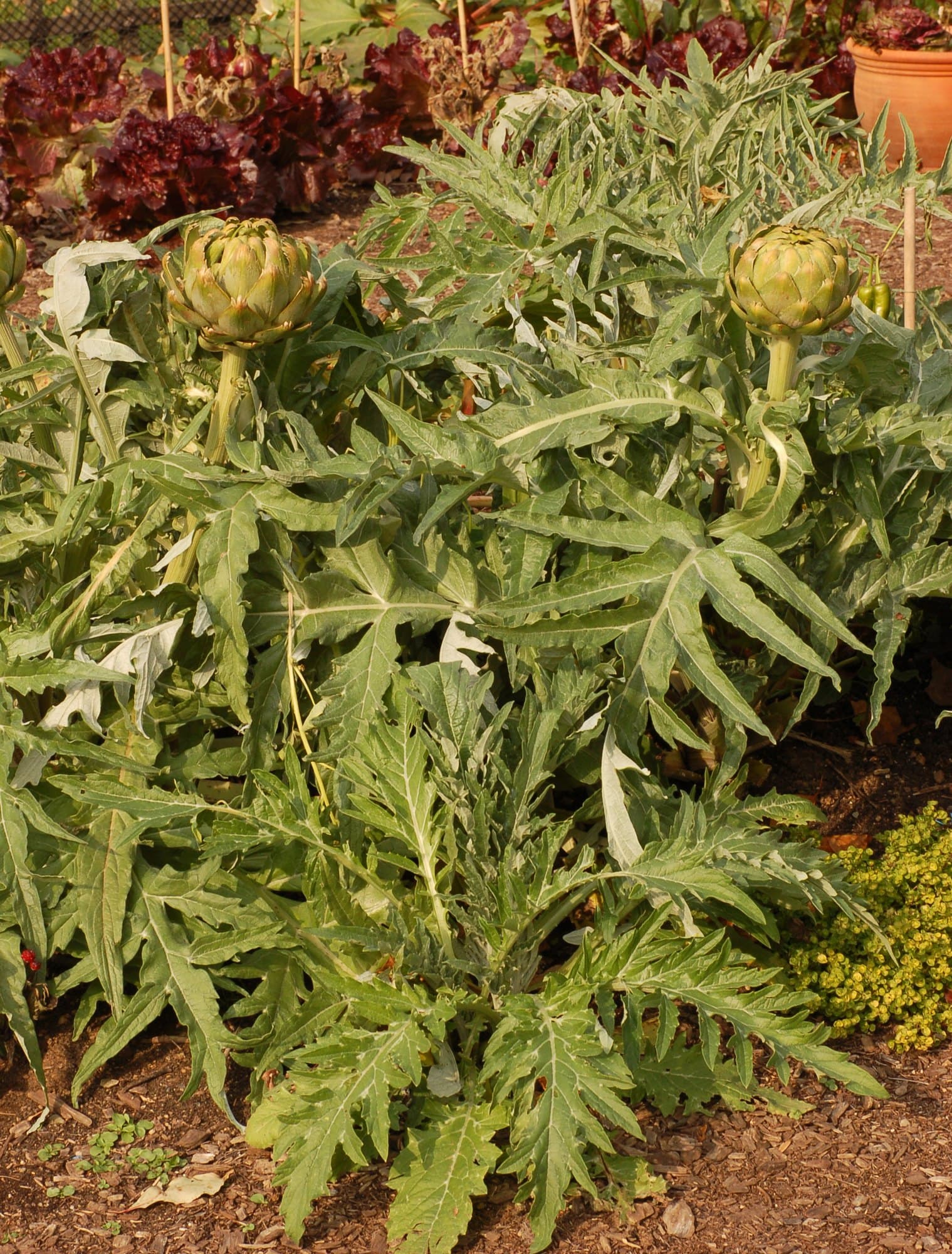
growingThe plant: a great silver thistle with buds on tall stems. Chanticleer Garden, Pennsylvania. 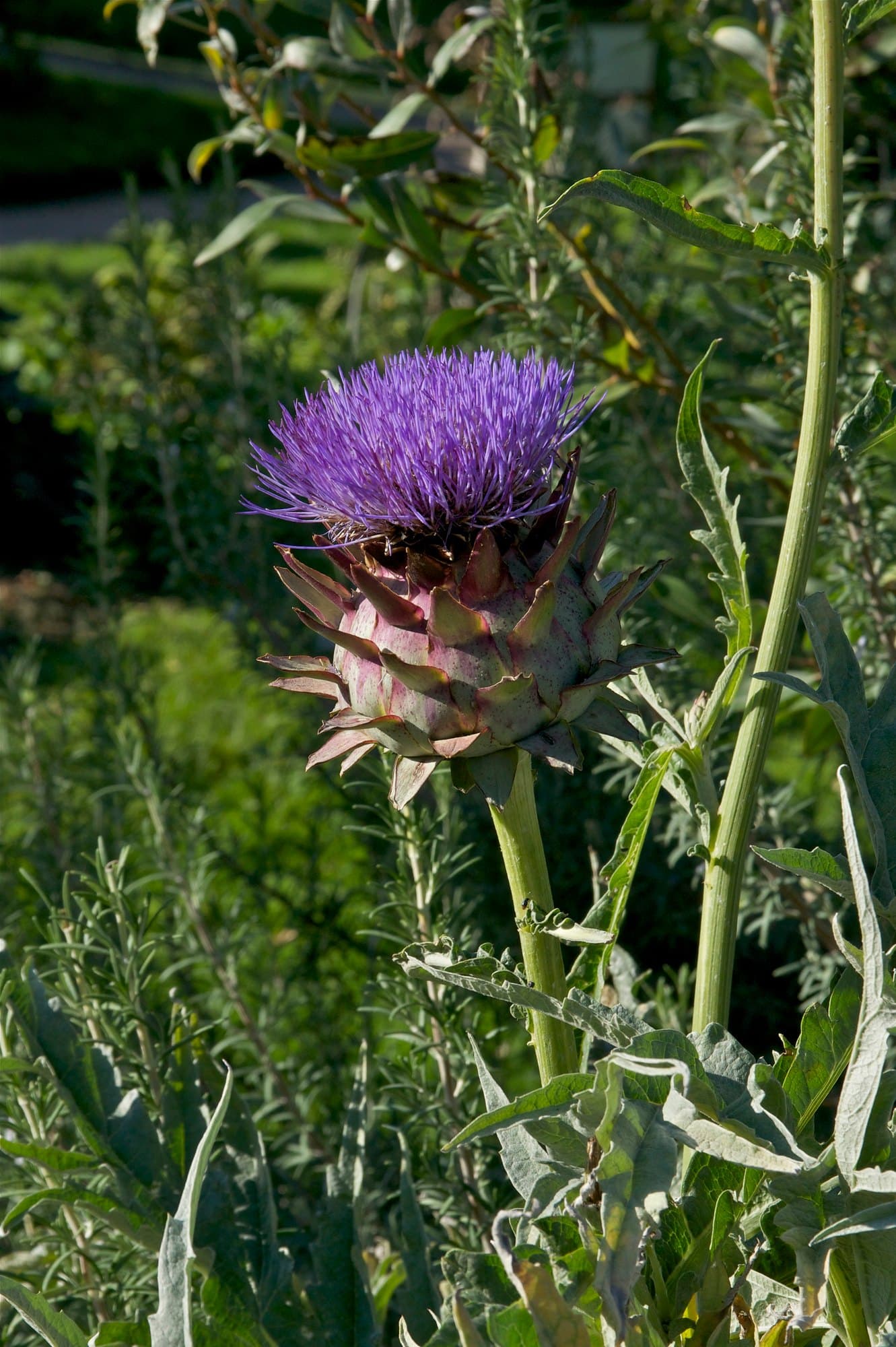
identifying featuresLeft uncut, the bud opens into a violet thistle flower. Jardin des Plantes, Paris. 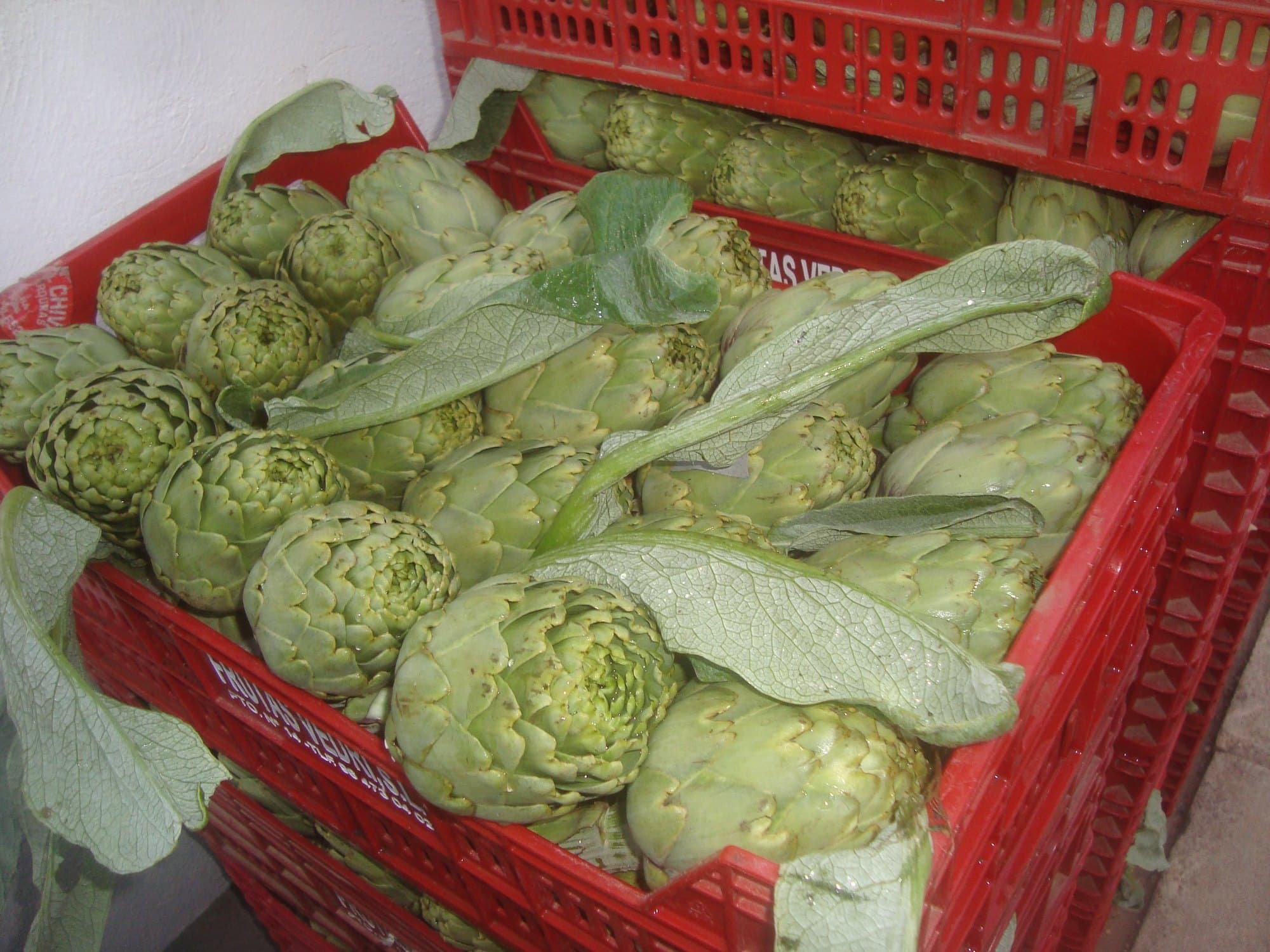
harvestedHarvested: tight green buds with a length of stem. 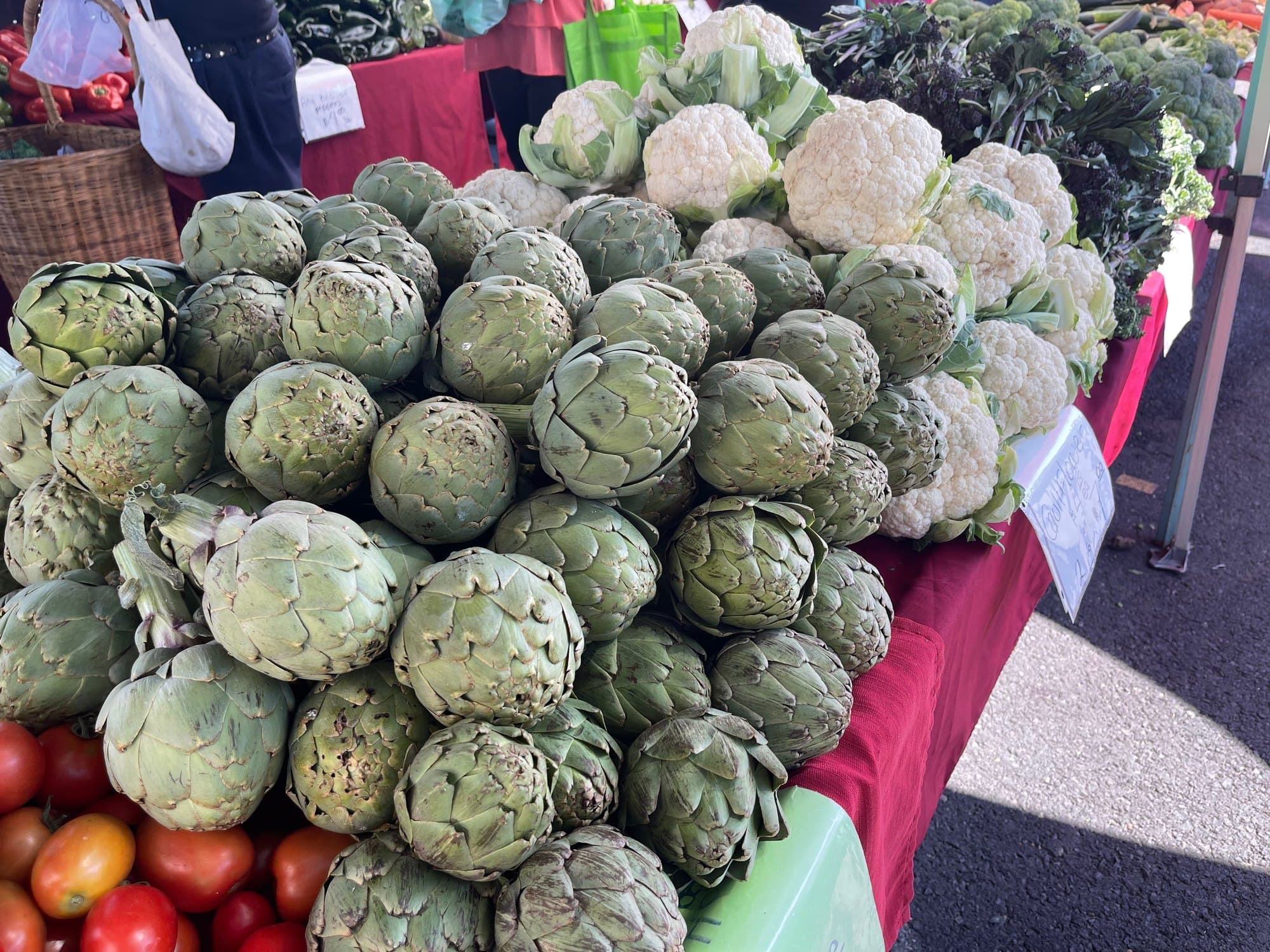
harvestedAt market: buds still closed, bracts overlapping like scales. 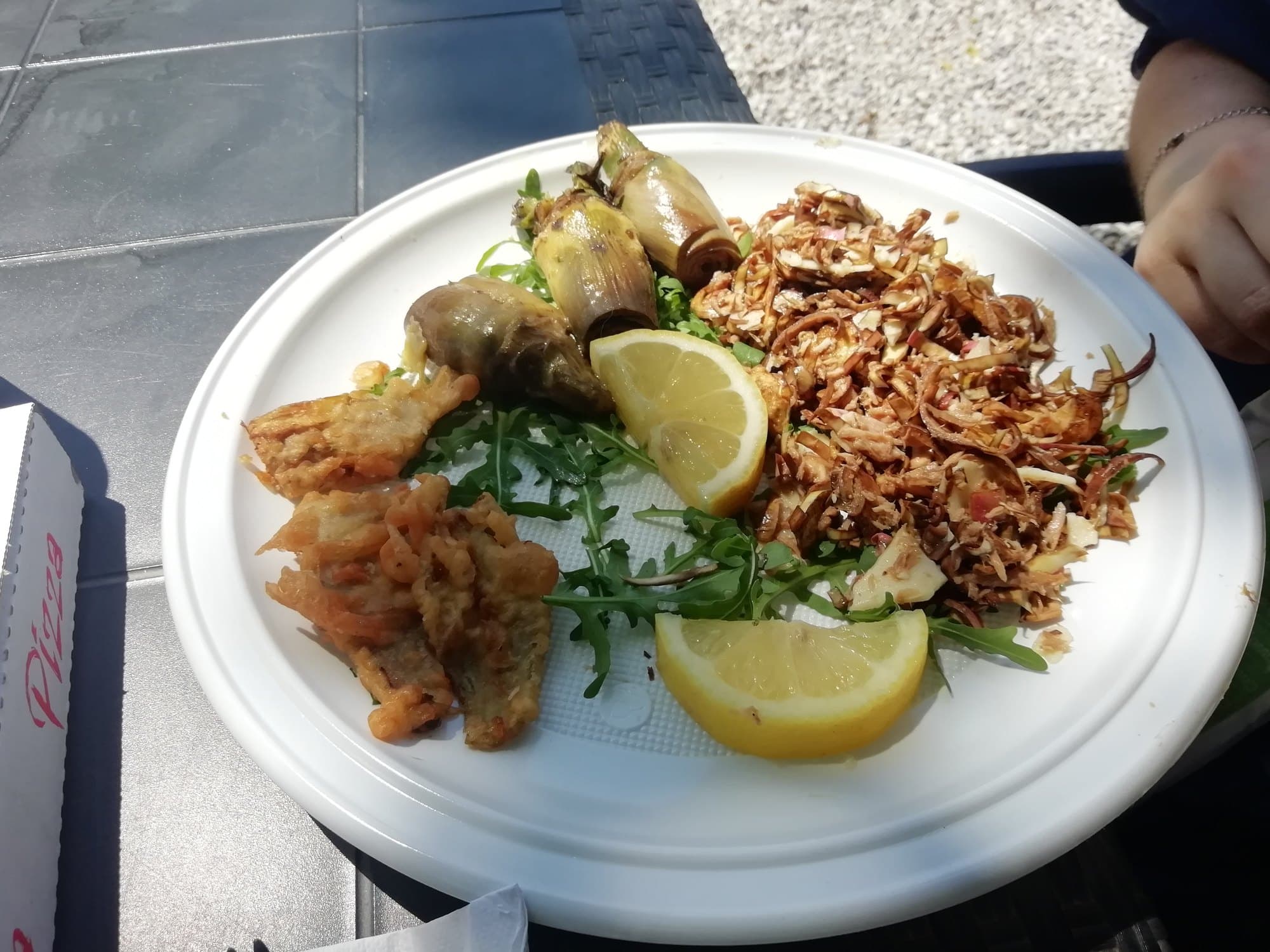
preparedCooked: artichokes of Sant'Erasmo, Venice, prepared three ways.
- Growth habit
- A large perennial thistle, one to one and a half metres high and as wide, with a clump of arching silver-grey leaves and tall flowering stems.
- Leaves
- Very large, deeply lobed, grey-green leaves up to a metre long, silvery and felted beneath, with few or no spines on cultivated forms.
- Stem
- Thick, ridged, grey-green flowering stems carrying one bud at the tip and several smaller ones below.
- Flower
- If left uncut, the bud opens into a striking violet-purple thistle flower fifteen centimetres across.
- Colour
- Green to purple-tinged buds depending on the variety; silver-grey foliage.
- Aroma
- Faint and green when cut; the cut surfaces brown quickly.
- Texture
- Tightly packed, leathery bracts around a tender heart and a fibrous choke.
- Distinguishing features
- The globe-shaped bud with overlapping fleshy bracts on a tall silver thistle; the purple flower if it opens.
- Common lookalikes
- Cardoon is the same species grown for its leaf stalks and looks almost identical in leaf; its buds are smaller and spinier. Ornamental and wild thistles have spiny, inedible heads.
In the garden
Growing and harvest.
- Conditions
- Full sun, deep rich soil, room to spread and steady water while the buds form; a perennial that crops for four or five years.
- Season
- The main crop of buds comes in spring, with a smaller flush in autumn in mild climates. Seasons vary by region and climate.
- Harvested part
- The flower bud, cut with a length of stem before it begins to open.
- Ready when
- Bracts still tight and squeaking when pressed; once they begin to spread and the choke develops, the bud is past its best.
In the kitchen
Flavour and use.
- Flavour
- Nutty and faintly sweet with a mild bitterness, leaving a lingering sweetness on the palate that makes wine taste sweeter.
- Aroma
- Green and earthy.
- Texture
- Tender heart; fleshy bract bases; the inner choke is fibrous and removed on mature buds.
- Edible parts
- The heart, the fleshy base of each bract and the peeled stem; the choke is removed from all but the youngest buds.
- Preparations
- Trimmed and braised (alla romana), Fried whole (alla giudia), Raw, shaved thinly with lemon and olive oil, Steamed whole and eaten leaf by leaf, Preserved under oil
- Techniques
- Trimming and turning, Braising, Frying, Steaming, Preserving in oil
- Pairs with
- Lemon, Olive oil, Mint, Garlic, Parmesan, Anchovy
- How Paul uses it
- Artichokes appear in the photographs on the Training and Notebook pages, and on the Ingredient pillar of the Culinary Philosophy.
Selection and storage
Choosing, keeping, preserving.
- Choosing
- Heavy for its size, tightly closed, with a fresh cut stem; squeezing should make the bracts squeak. Avoid buds that have opened or browned.
- Storage
- Refrigerate in a bag, stem in a little water if possible, and use within a few days.
- Preserving
- Hearts blanched and preserved under oil, or blanched and frozen.
Traditional uses, nutrition and current evidence
What is known, and how well.
Each statement carries its evidence level in words and a numbered source. Nothing here recommends an ingredient as a treatment.
Nutrition
Traditional use
Traditional use, not clinically established
The European Medicines Agency's herbal monograph records artichoke leaf, not the edible bud, as a traditional herbal medicine for the relief of digestive complaints such as bloating and fullness. This is a traditional-use registration for leaf preparations. [3]
Current evidence
Early or limited evidence
A Cochrane systematic review found that artichoke leaf extract may modestly lower total cholesterol in some trials, but the studies were few, small and of limited quality, so the effect is not established. The research concerns concentrated leaf extracts, not artichokes eaten as a vegetable. [4]
Safety and cautions
Before you cook with it.
- Eaten as a vegetable, artichoke is safe for most people.
- Allergy to artichoke is uncommon but occurs, especially in people allergic to other daisy-family plants (ragweed, chrysanthemum, chamomile).
- The EMA advises that artichoke leaf preparations are not for anyone with an obstruction of the bile duct or gallstones without medical advice; that concerns the concentrated preparations.
- The inulin in artichoke can cause wind and bloating in sensitive people.
This ingredient profile is provided for culinary and general educational purposes. It is not medical advice and does not recommend an ingredient as a treatment. Anyone who is pregnant, managing a medical condition, allergic, or taking medication should consult an appropriate healthcare professional before using concentrated herbal preparations or supplements.
Sources and review
- 1USDA FoodData Central, Artichokes, (globe or french), rawNational food-composition database
- 2National Institutes of Health, Office of Dietary Supplements, Folate fact sheetGovernment health agency
- 3European Medicines Agency, Committee on Herbal Medicinal Products. European Union herbal monograph on Cynara cardunculus L. (syn. Cynara scolymus L.), folium (EMA/HMPC/194013/2017), 2018.Medicines regulator
- 4Wider B, Pittler MH, Thompson-Coon J, Ernst E. Artichoke leaf extract for treating hypercholesterolaemia. Cochrane Database of Systematic Reviews. 2013;(3):CD003335.Cochrane systematic review
Sources reviewed 9 September 2026. Culinary and general educational information.
Photograph credits
- Artichoke Cynara cardunculus Plants 2000px.jpg by Derek Ramsey (Ram-Man), with co-attribution to the Chanticleer Garden, CC BY-SA 3.0, via Wikimedia Commons. Resized for the web; otherwise unaltered.
- Cynara cardunculus var. scolymus in Jardin des Plante de Paris.jpg by Jebulon, CC0, via Wikimedia Commons. Resized for the web; otherwise unaltered.
- Cosecha de alcachofas.jpg by Juan Emilio Prades Bel, CC BY-SA 4.0, via Wikimedia Commons. Resized for the web; otherwise unaltered.
- Napa Farmers Market - August 2023 - Sarah Stierch 17.jpg by Sarah Stierch (Missvain), CC BY 4.0, via Wikimedia Commons. Resized for the web; otherwise unaltered.
- 3 ways of cooking artichokes.jpg by Luca.favorido, CC BY-SA 4.0, via Wikimedia Commons. Resized for the web; otherwise unaltered.