Lemon
Citrus × limon
The kitchen's sharpest tool: juice for acidity, zest for perfume, and the fruit that finishes fish, vegetables and almost everything else.
- Also
- Limone, Lemons
- Family
- Rutaceae (citrus family)
How to recognise it
In the garden and in the hand.
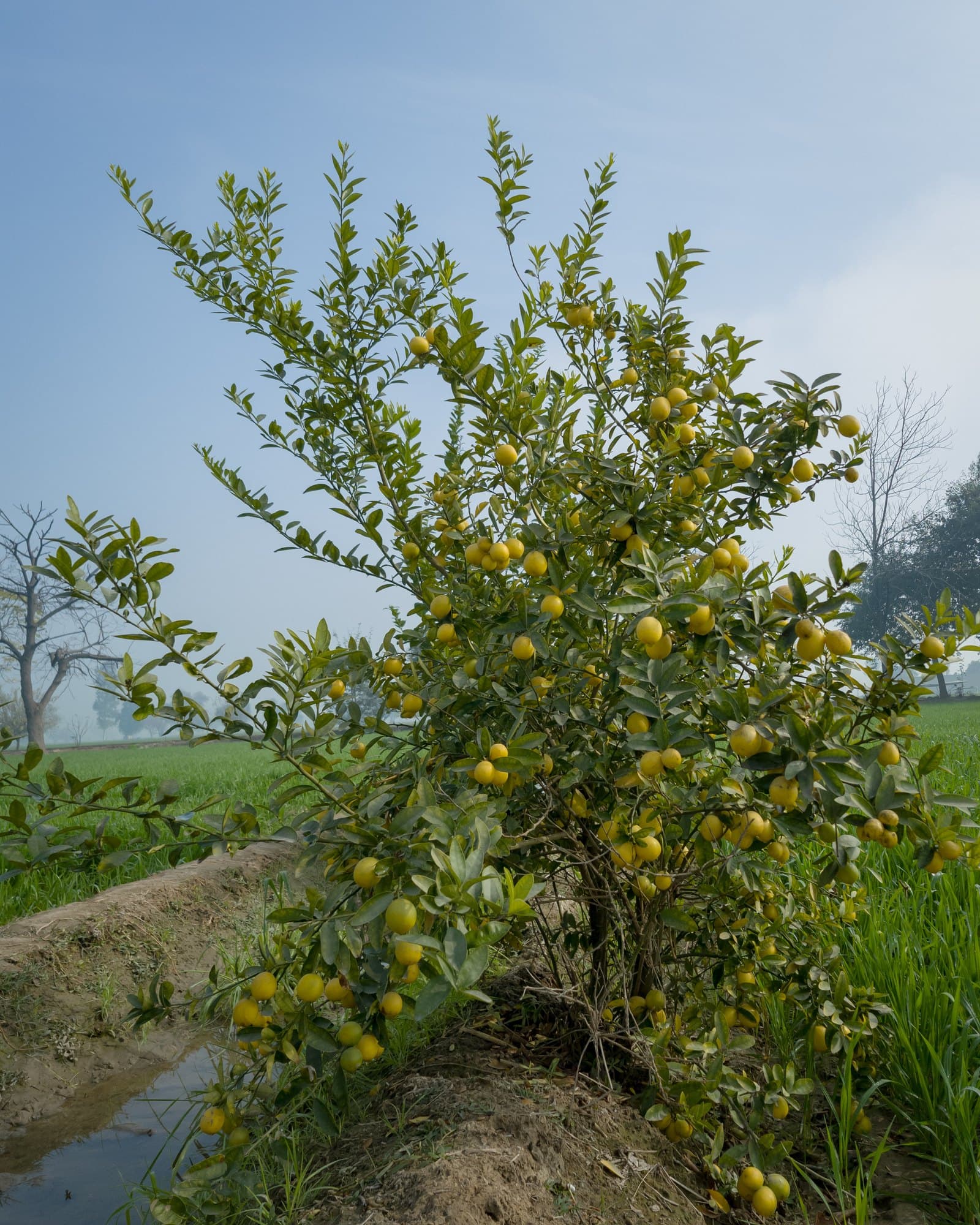
growingThe tree: a small evergreen carrying fruit through winter. Burj Bhalaike, Punjab. 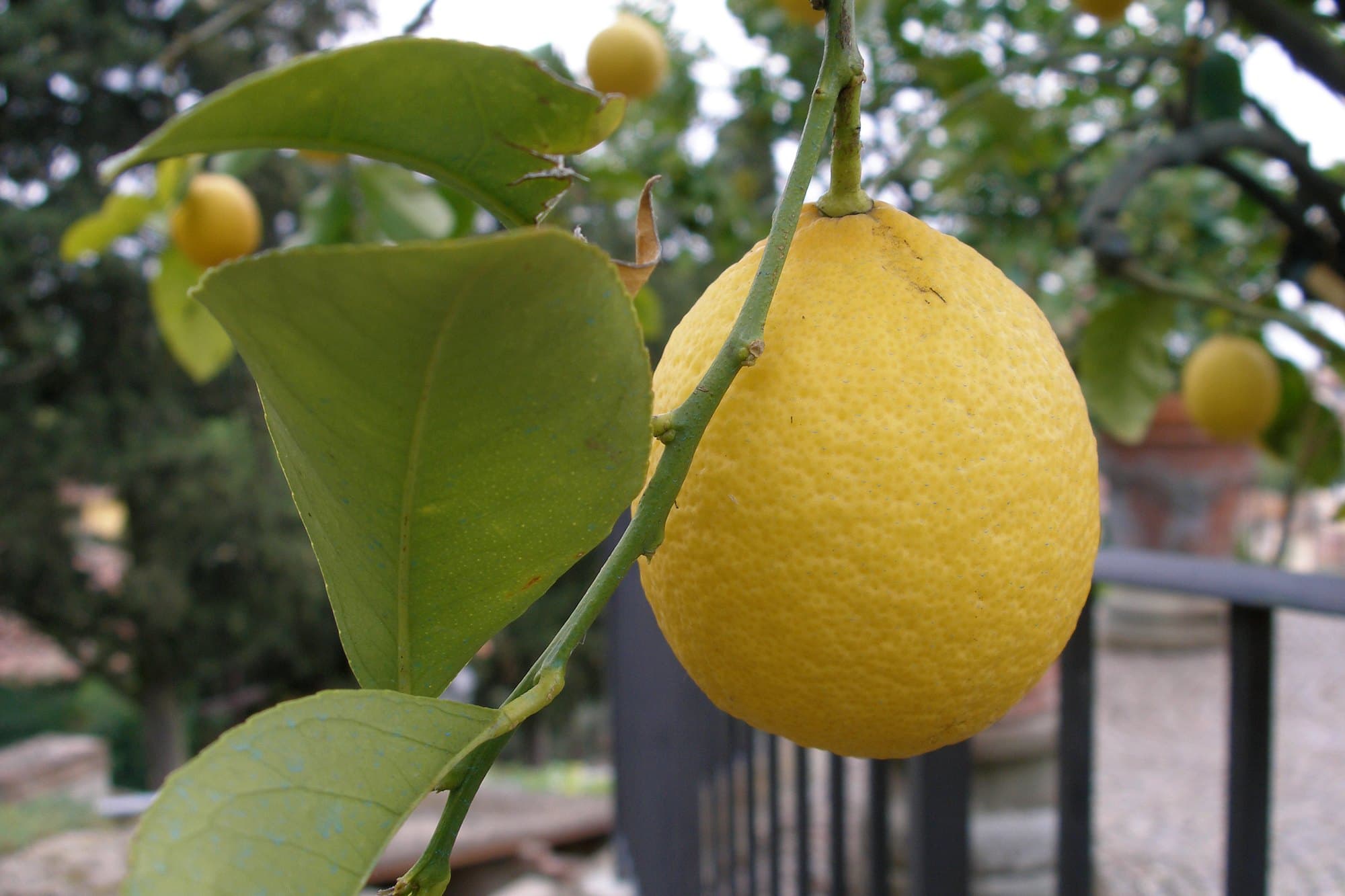
identifying featuresThe fruit on the branch: oval, nippled at the tip, among glossy leaves. Florence. 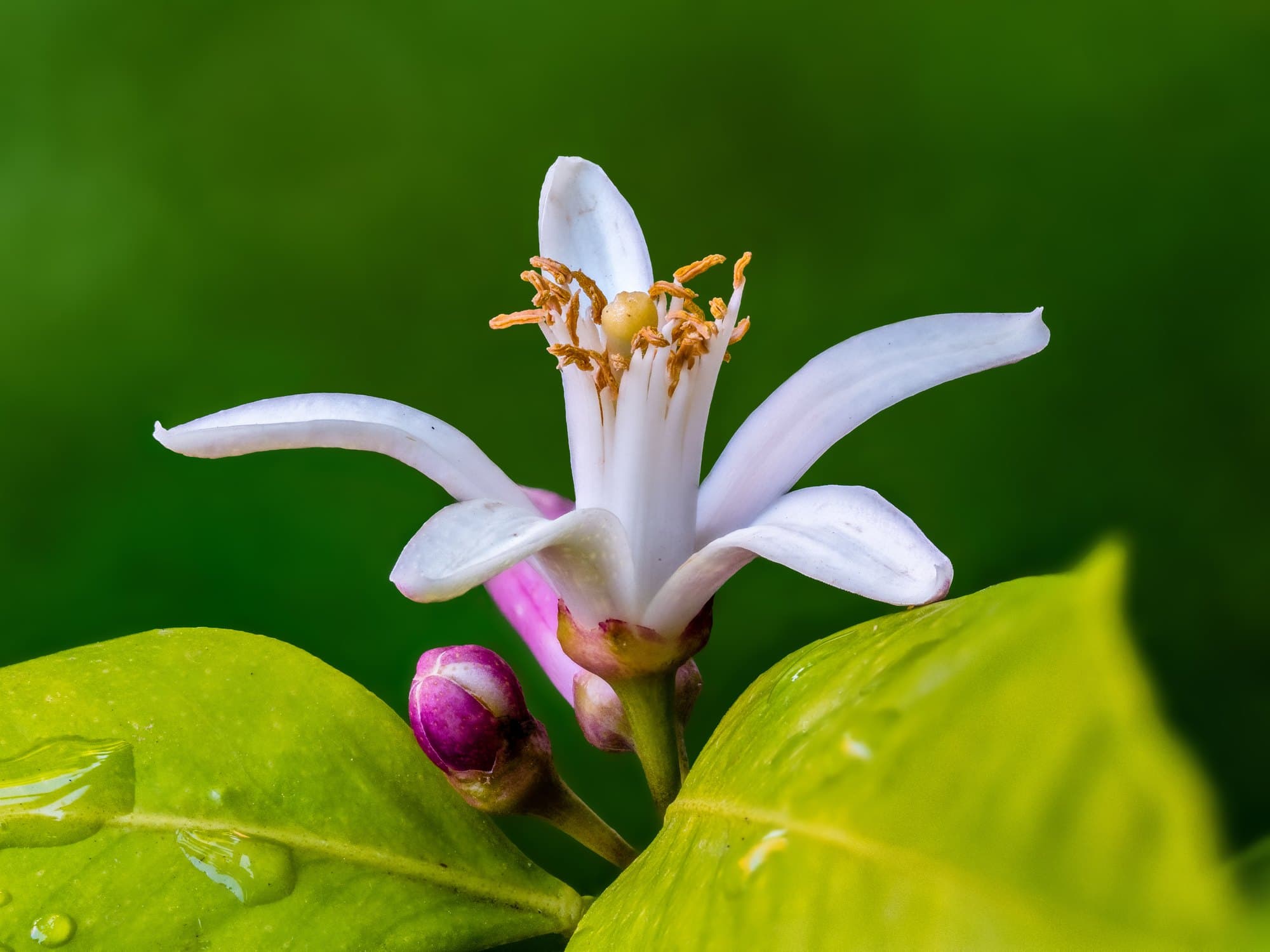
identifying featuresFlowers: white and waxy, flushed purple in bud, intensely fragrant. 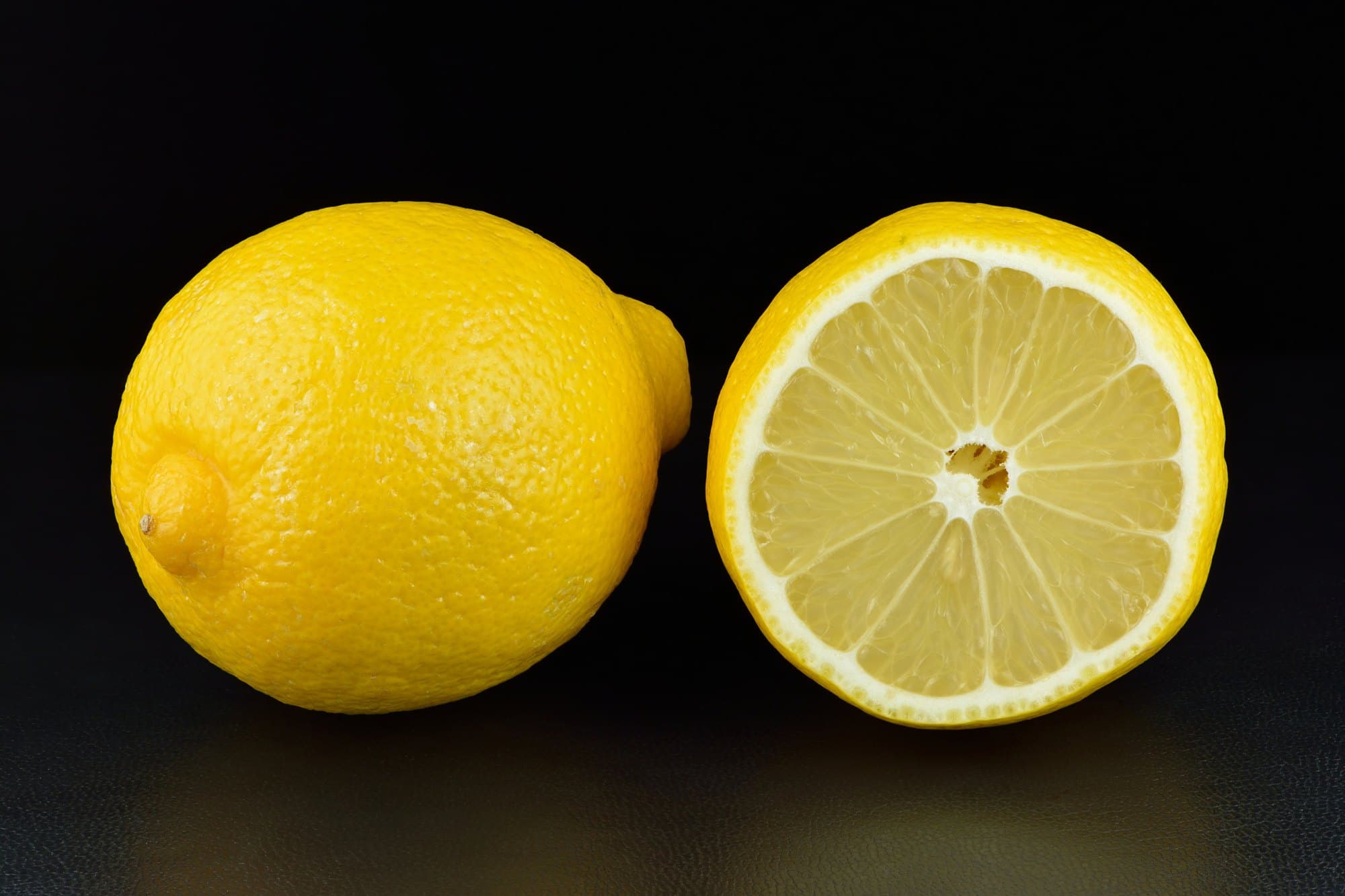
preparedIn the kitchen: whole and halved.
- Growth habit
- A small evergreen tree, three to six metres high, with an open, often thorny crown; it flowers and fruits through much of the year.
- Leaves
- Oval, glossy, dark green leaves with a faintly winged stalk and a citrus scent when crushed.
- Stem
- Grey-barked branches, often with short sharp thorns at the leaf joints; young shoots are reddish.
- Flower
- White, five-petalled, waxy flowers flushed purple on the outside, intensely fragrant, in small clusters.
- Colour
- Fruit green when immature, ripening to bright yellow; the rind is dimpled with oil glands.
- Aroma
- Sharp, clean citrus from the oil in the rind; the leaves and flowers smell of it too.
- Texture
- Firm, glossy rind over a white pith and segmented juicy flesh.
- Distinguishing features
- Oval yellow fruit with a nipple at the tip, purple-flushed white flowers, thorny branches and scented leaves.
- Common lookalikes
- Citron has a thicker pith and larger, knobbly fruit. Lime is smaller, green and rounder. Ornamental citrus can look similar; the fruit and scent decide it.
In the garden
Growing and harvest.
- Conditions
- Full sun, shelter from frost and wind, free-draining soil and regular feeding; a container tree where winters are cold.
- Season
- Trees carry flowers and fruit together, and fruit can be picked over many months; the main harvest falls in winter and spring in most regions. Seasons vary by region and climate.
- Harvested part
- The fruit; the leaves are used in some cuisines for scent.
- Ready when
- Full yellow colour, a slight give in the hand, and a heavy, juicy feel.
In the kitchen
Flavour and use.
- Flavour
- Sharply acidic with a clean, bright bitterness in the pith; the zest is aromatic rather than sour.
- Aroma
- The rind's oil: floral, sharp and immediately recognisable.
- Texture
- Juicy segments; fine oily zest; bitter white pith.
- Edible parts
- Juice and zest; the whole fruit when preserved in salt; the leaves for scenting.
- Preparations
- Juice to finish a dish, Zest into pasta, risotto and cakes, Preserved whole in salt, Candied peel, Salsa and gremolata
- Techniques
- Zesting, Juicing, Preserving in salt, Candying, Roasting alongside fish and chicken
- Pairs with
- Olive oil, Fish and shellfish, Artichoke, Chicken, Parsley, Butter
- How Paul uses it
- Lemon runs through the Recipes page, with preserved lemon in Polpo alla griglia and lemon in the crab ravioli, and bowls of lemons sit in the photographs on The Table and the Library.
Selection and storage
Choosing, keeping, preserving.
- Choosing
- Heavy for its size, fine-grained bright skin with a slight give; thin-skinned fruit yield more juice.
- Storage
- A week at room temperature, three or four in the fridge; cut lemon keeps a few days wrapped.
- Preserving
- Preserved in salt for months; juice frozen in portions; zest dried or frozen; peel candied.
Traditional uses, nutrition and current evidence
What is known, and how well.
Each statement carries its evidence level in words and a numbered source. Nothing here recommends an ingredient as a treatment.
Nutrition
Traditional use
Traditional use, not clinically established
Lemons were carried on ships from the eighteenth century onward to prevent scurvy, a use that later research explained through their vitamin C content. [2]
Current evidence
Supported by human research
Vitamin C is an essential nutrient needed for collagen formation, wound healing and iron absorption from plant foods, and lemon juice is a practical dietary source of it. Eating lemons does not prevent colds or treat infections. [2]
Safety and cautions
Before you cook with it.
- Lemon is safe for most people as food.
- Frequent sipping of lemon juice or lemon water erodes tooth enamel because of its acidity; rinse with water afterwards rather than brushing immediately.
- Lemon and lime juice or peel on the skin followed by sunlight can cause phytophotodermatitis, a burn-like rash, in some people. Wash hands after handling large quantities before working in the sun.
- Citrus allergy is uncommon but exists.
This ingredient profile is provided for culinary and general educational purposes. It is not medical advice and does not recommend an ingredient as a treatment. Anyone who is pregnant, managing a medical condition, allergic, or taking medication should consult an appropriate healthcare professional before using concentrated herbal preparations or supplements.
Elsewhere on DUKAI
Also in the library
Sources and review
- 1USDA FoodData Central, Lemons, raw, without peelNational food-composition database
- 2National Institutes of Health, Office of Dietary Supplements, Vitamin C fact sheetGovernment health agency
- 3Hankinson A, Lloyd B, Alweis R. Lime-induced phytophotodermatitis. Journal of Community Hospital Internal Medicine Perspectives. 2014;4(4):25090.Peer-reviewed case report and review
- 4Lussi A, Jaeggi T. Erosion: diagnosis and risk factors. Clinical Oral Investigations. 2008;12(Suppl 1):5-13.Peer-reviewed review
Sources reviewed 9 September 2026. Culinary and general educational information.
Photograph credits
- Lemon tree full of Lemons, Burj Bhalaike.jpg by Kuldeepburjbhalaike, CC BY-SA 4.0, via Wikimedia Commons. Resized for the web; otherwise unaltered.
- Lemon, Lemon tree, Florence, Italy.jpg by Vyacheslav Argenberg, CC BY 4.0, via Wikimedia Commons. Resized for the web; otherwise unaltered.
- Citrus flower 2019-06-13 09-54-06 (C)-PSD.jpg by Reinhold Möller (Ermell), CC BY-SA 4.0, via Wikimedia Commons. Resized for the web; otherwise unaltered.
- Lemon - whole and split.jpg by Ivar Leidus, CC BY-SA 4.0, via Wikimedia Commons. Resized for the web; otherwise unaltered.