Chickpea
Cicer arietinum
The nutty, firm pulse of hummus, farinata and countless soups: cheap, storable and the backbone of Mediterranean and South Asian cooking.
- Also
- Garbanzo bean, Ceci, Chana
- Family
- Fabaceae (pea family)
How to recognise it
In the garden and in the hand.
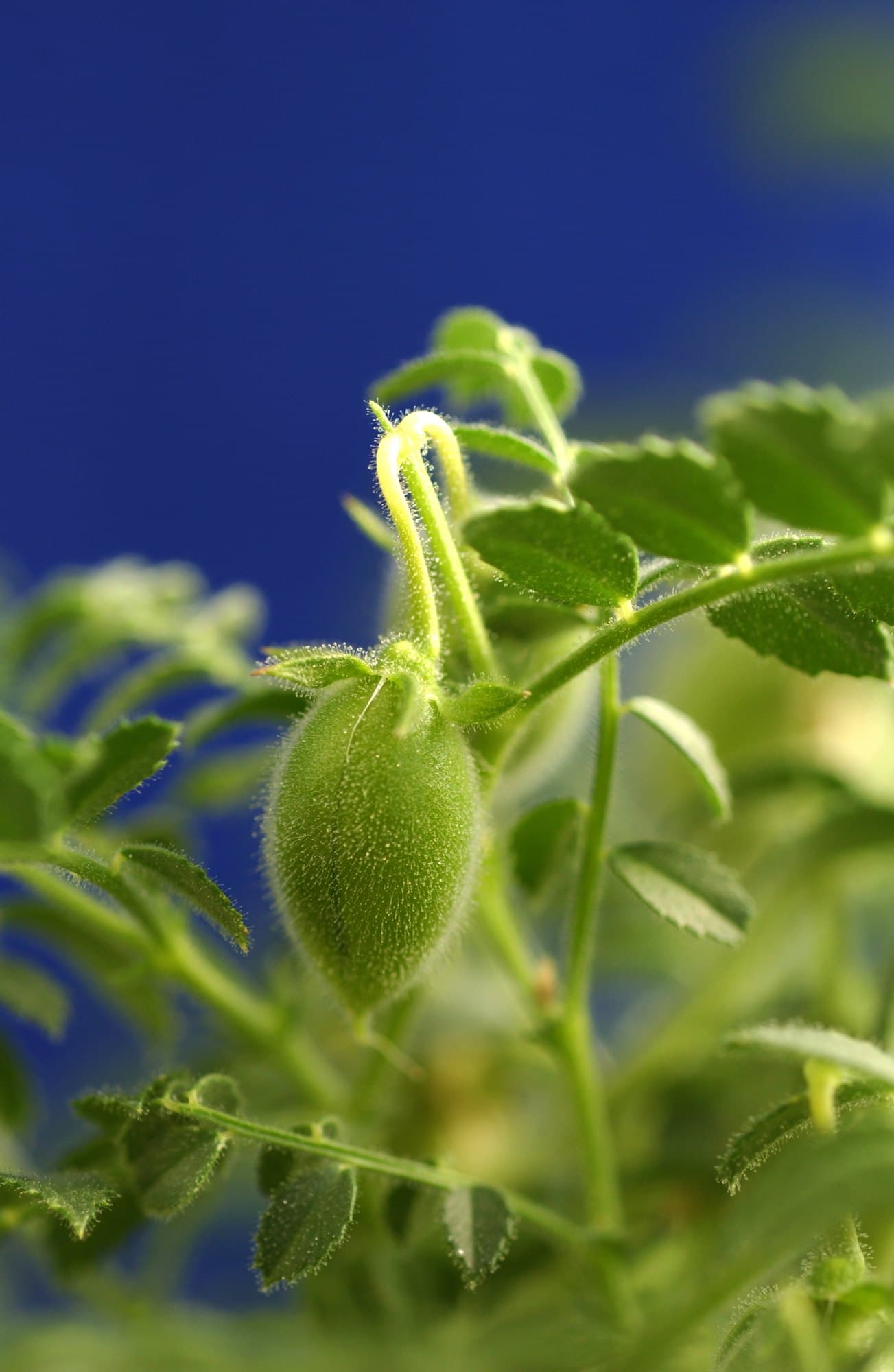
growingThe plant: feathery toothed leaflets and a single inflated pod. CSIRO glasshouse. 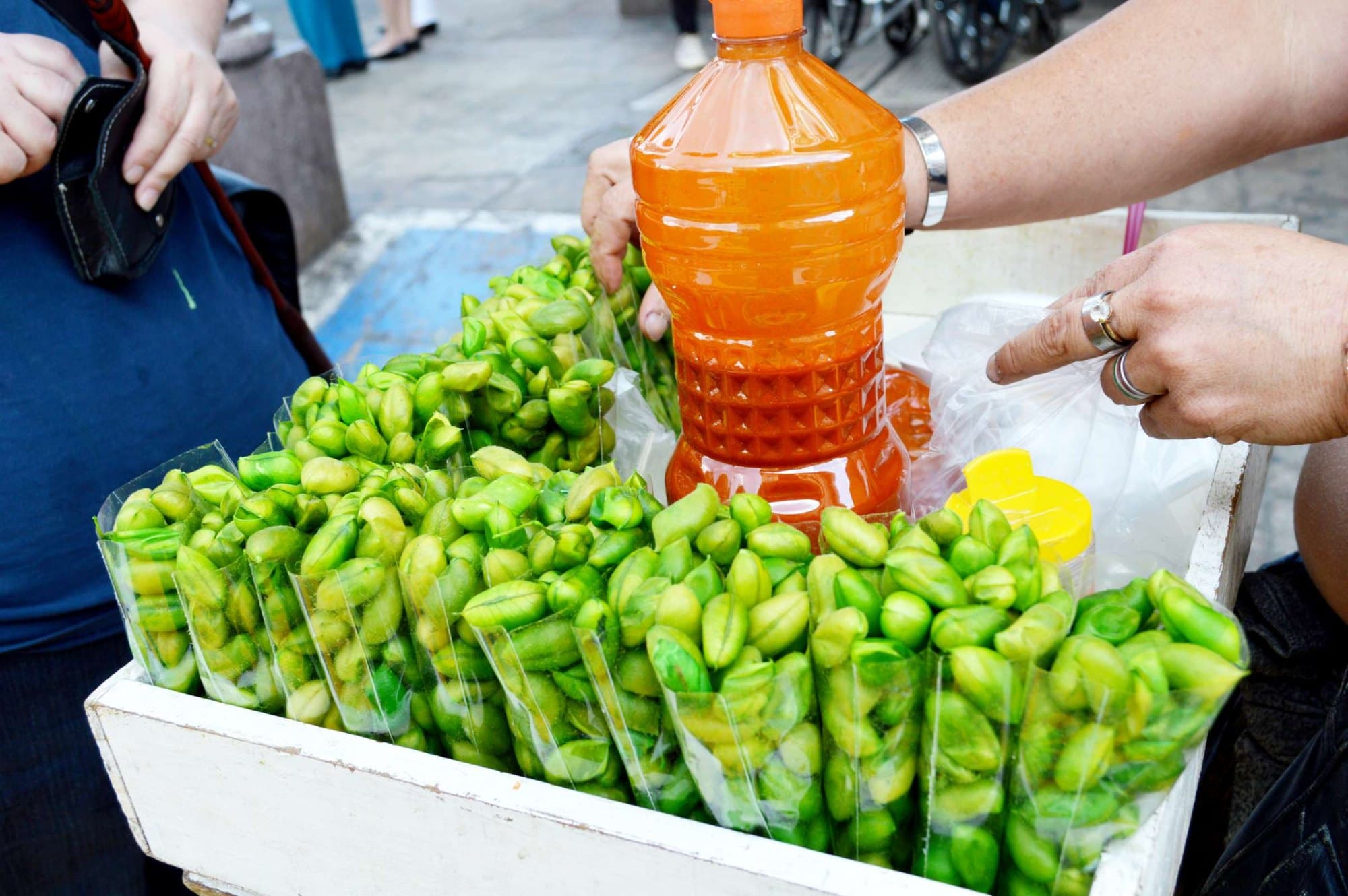
harvestedHarvested green: pods sold fresh at a street stall in Uruapan, Mexico. 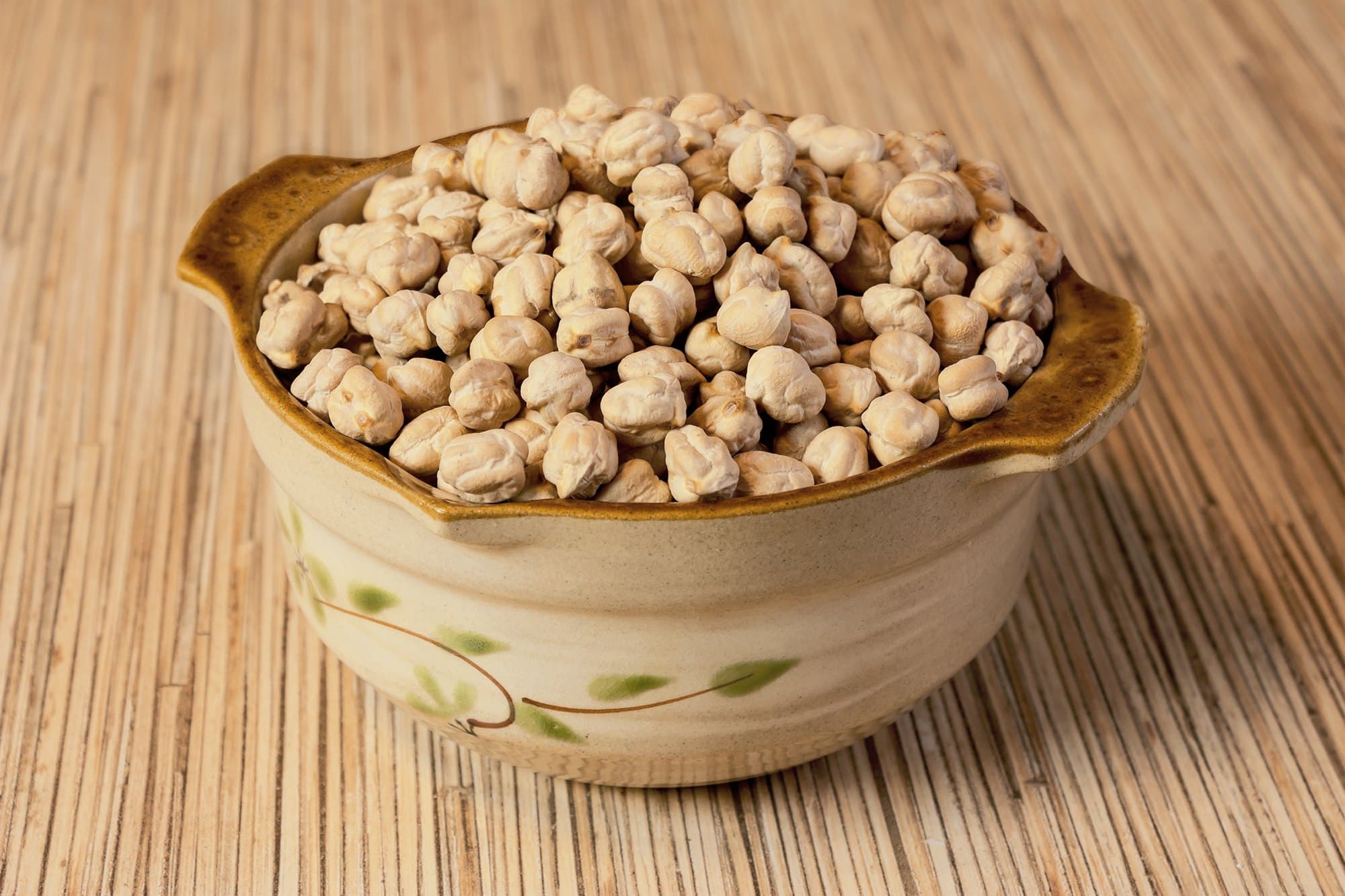
harvestedDried: the form most kitchens receive. 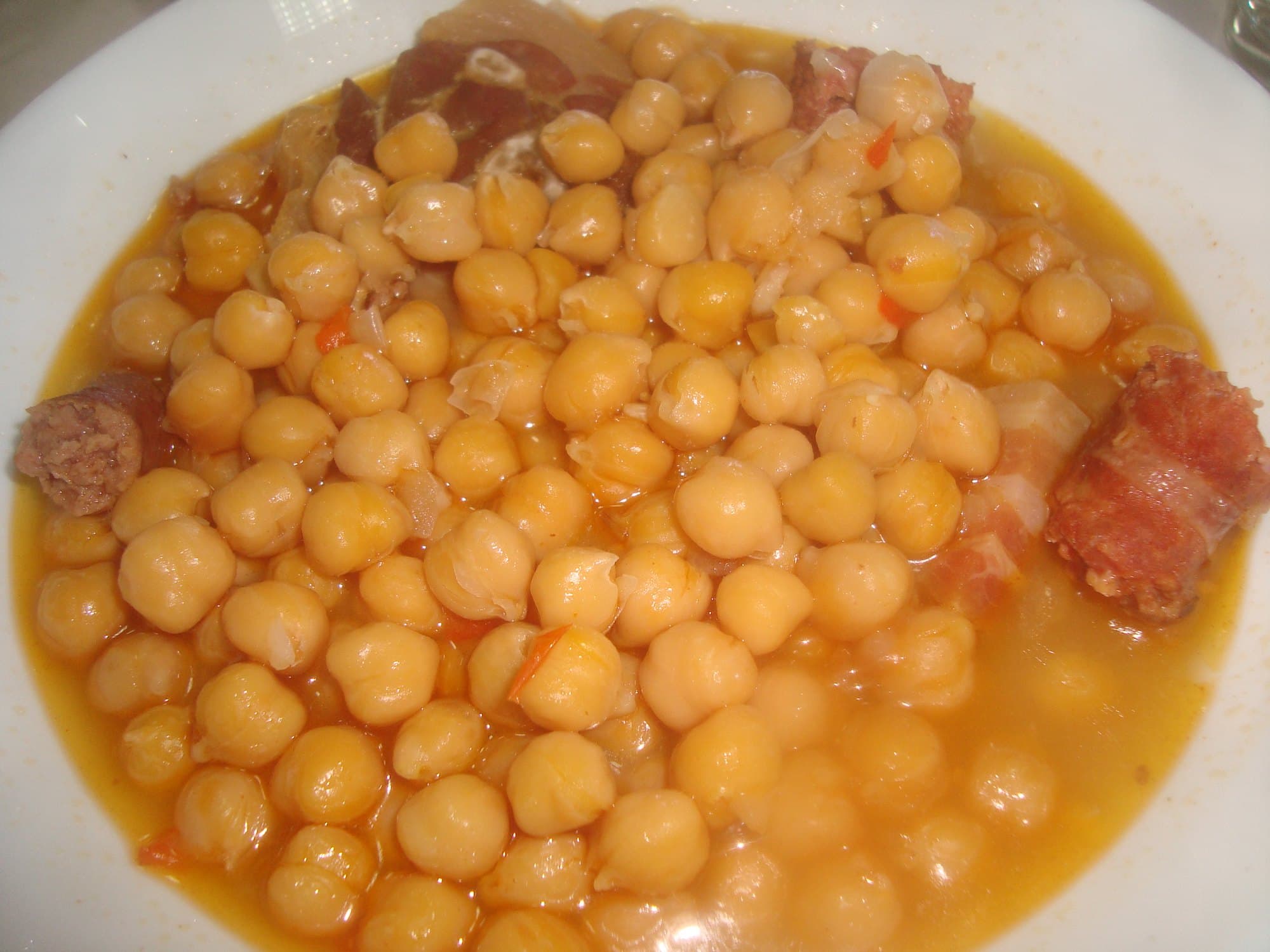
preparedCooked: soft, golden, in their own liquid.
- Growth habit
- A bushy annual, twenty to sixty centimetres high, with fine hairy stems and feathery foliage; grown as a field and garden crop.
- Leaves
- Small, oval, toothed leaflets in pairs along a central stalk, covered in fine glandular hairs that feel slightly sticky.
- Stem
- Slender, branching, hairy stems.
- Flower
- Small pea-like flowers, white, pink or violet, borne singly.
- Colour
- Green pods; seeds cream to tan (kabuli types) or small and dark brown (desi types).
- Aroma
- Little when raw; nutty when cooked.
- Texture
- Hard dried seeds that soften to a firm, mealy bite when cooked.
- Distinguishing features
- Short, inflated, hairy pods holding one or two rounded, beaked seeds; the beak is the giveaway.
- Common lookalikes
- Other small legumes in the field; in the kitchen, dried chickpeas are distinct from peas and beans by their wrinkled, beaked shape.
In the garden
Growing and harvest.
- Conditions
- Full sun, light well-drained soil and a dry season to ripen; a cool-season crop in warm regions.
- Season
- Sown in spring (or autumn in mild climates), green pods in early summer, dried seed at the end of summer. Seasons vary by region and climate.
- Harvested part
- The seeds, green in the pod or dried; also the young shoots in some cuisines.
- Ready when
- Green when pods are plump and still tender; dried when the plant yellows and pods rattle.
In the kitchen
Flavour and use.
- Flavour
- Nutty, earthy, faintly sweet.
- Aroma
- Nutty and starchy when cooked.
- Texture
- Firm and mealy; creamy when puréed; crisp when roasted.
- Edible parts
- The seeds, green or dried; chickpea flour (gram flour, farina di ceci).
- Preparations
- Soaked and simmered from dried, Puréed into hummus, Roasted until crisp, Chickpea flour batter for farinata and panelle, Stewed with vegetables and spices
- Techniques
- Soaking, Simmering, Puréeing, Roasting, Frying (falafel)
- Pairs with
- Olive oil, Lemon, Garlic, Cumin, Rosemary, Octopus
- How Paul uses it
- Chickpeas sit under the charred octopus in Polpo alla griglia on the Recipes page.
Selection and storage
Choosing, keeping, preserving.
- Choosing
- Dried: uniform, unbroken, not dusty or shrivelled; fresher dried pulses cook faster. Tinned: firm, not mushy. Green: plump, tender pods.
- Storage
- Dried, in an airtight jar in a cool dark place for up to a year (older beans cook more slowly). Cooked, refrigerated in their liquid for up to four days.
- Preserving
- Cooked chickpeas freeze well in portions with a little cooking liquid.
Traditional uses, nutrition and current evidence
What is known, and how well.
Each statement carries its evidence level in words and a numbered source. Nothing here recommends an ingredient as a treatment.
Nutrition
Traditional use
Traditional use, not clinically established
One of the earliest cultivated crops of the Near East, eaten for at least seven thousand years, and a staple protein where meat is scarce. No particular remedial use is claimed. [3]
Current evidence
Supported by human research
A systematic review and meta-analysis of randomised trials found that eating about a serving of pulses (beans, chickpeas, lentils, peas) a day modestly lowered LDL cholesterol. That is a dietary-pattern effect from ordinary food; chickpeas are not a treatment for high cholesterol. [4]
Safety and cautions
Before you cook with it.
- Chickpeas are safe for most people as food.
- Allergy to chickpea exists and is more common in regions where it is a staple; people allergic to lentil, pea or peanut can cross-react.
- Dried chickpeas must be soaked and fully cooked; undercooked pulses are hard to digest. They cause wind in many people, which soaking, thorough cooking and gradual increases in intake reduce.
- Chickpea flour and products may be processed alongside wheat; anyone avoiding gluten should check the label.
This ingredient profile is provided for culinary and general educational purposes. It is not medical advice and does not recommend an ingredient as a treatment. Anyone who is pregnant, managing a medical condition, allergic, or taking medication should consult an appropriate healthcare professional before using concentrated herbal preparations or supplements.
Elsewhere on DUKAI
Also in the library
Sources and review
- 1USDA FoodData Central, Chickpeas (garbanzo beans, bengal gram), mature seeds, cooked, boiled, without saltNational food-composition database
- 2National Institutes of Health, Office of Dietary Supplements, Folate fact sheetGovernment health agency
- 3Food and Agriculture Organization of the United Nations. Pulses: nutritious seeds for a sustainable future. Rome: FAO; 2016.United Nations agency
- 4Ha V, Sievenpiper JL, de Souza RJ, et al. Effect of dietary pulse intake on established therapeutic lipid targets for cardiovascular risk reduction: a systematic review and meta-analysis of randomized controlled trials. CMAJ. 2014;186(8):E252-E262.Peer-reviewed systematic review and meta-analysis
Sources reviewed 9 September 2026. Culinary and general educational information.
Photograph credits
- CSIRO ScienceImage 3223 Chickpeas in glasshouse.jpg by Carl Davies, CSIRO, CC BY 3.0, via Wikimedia Commons. Resized for the web; otherwise unaltered.
- ChickpeasUruapan01.JPG by Alejandro Linares Garcia, CC BY-SA 4.0, via Wikimedia Commons. Resized for the web; otherwise unaltered.
- Ordinary chickpeas in a ceramic bowl.jpg by AlixSaz, CC BY-SA 4.0, via Wikimedia Commons. Resized for the web; otherwise unaltered.
- Cigrons cuits.jpg by Juan Emilio Prades Bel, CC BY-SA 4.0, via Wikimedia Commons. Resized for the web; otherwise unaltered.